














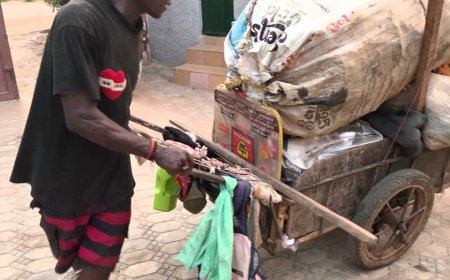

Read to end, understand Enugu's water debacle and Gov Mbah's efforts
The Enugu water supply has had over 40 years stagnation but with Mbah's intervention there's hope of improved water supply

By John 'lead' Agbo


The problem of water scarcity in Enugu State is a well-documented historical fact. The water issues in our state and indeed throughout Nigeria and beyond are not germane ones, nor did they pop up from the air during the time of Gov. Peter Ndubuisi Mbah. It is embedded in the sands of time and history as we are going to show in this episode.
According to the critics from the opposition party members, the governor has failed to provide water to inhabitants of Enugu within the first 180 days he promised during his campaigns. But this narrative is more of trivializing, emotionalizing, and of course, politicking with the hydra-headed perennial lack of water for domestic use in Enugu metropolis rather than addressing the overriding need for a concerted permanent solution to the problem. Assuming without conceding the facts that Governor Mbah actually failed this particular promise of his, I ask, is it any different from what has largely been obtained in the past tenures within the last 30 years? How does celebrating such an unusual situation help the Enugu masses in need of water order than furthering the polluted political interests of some opportunistic politicians towards the 2027 general election?
It is in a bid to provide the holistic true situation report with a view to finding a permanent solution to it that I have decided to construct this interventionary contribution. Note that the copiously heroic approach already taken by the state governor, Dr. Peter Mbah, will be evidently highlighted to assure people that the issue of the scarcity of water in our state has, albeit for the first time, received the most genuine attention from this current government.
1924 Iva water scheme
The first attempt to provide pipe-borne water in Enugu, like many other places in Nigeria, was during the colonial rule specifically in 1924. The Iva Valley scheme was primarily built to supply piped water to colonial workers. In 2018, Chukwurah, observed that, "At inception, this was made to serve the expatriate coal miners and the colonial government administrators of the eastern region". But with an increase in population, urbanization, etc., the 'Iva Scheme', as it was then called, started experiencing expansion. With such a concerted upgrade to increase coverage, the Colonial government was able to make the scheme supply water to both government quarters, the teeming population, and industries at the time. The last upgrade was done between 1960 and 1962 when it was finally commissioned. It supplied water to GRA, Secretariat quarters, Iva pottery, in addition to the Iva valley areas of Enugu township.
The second successful attempt was the 9th Mile Borehole sunk in 1966 and commissioned in 1976. It was meant to supply water to satellite areas like NgwoAsaa, Ngwo Uno, Ebe, Eke, and Aboh. Yet it was extended to supply Coal Camp areas in a bid to serve more people. It was a very successful project at the time.
Then comes the Crash Program Scheme commissioned in 1982. The ever-swelling population again necessitated this scheme. Moreover, there was a growing need for industrial and domestic use of portable water. The government of the time was largely responsive and met the upsurging need instantly. This Crash program came on board as a temporary measure to bridge water scarcity while a substantive water scheme, the Ajali Water scheme, underwent construction. Its reservoir was situated at the foot of Milken Hill. These boreholes are energized by three generating sets, each with a 525kVA capacity, which serve as an alternative power supply to the scheme. Each of these energy sources controls four pumps. Chukwurah 2018, reports that "The crash programme comprises the drilling of 12 bore holes in the borehole field, with a combined output of about 2400cu.m3 /day, all of which are pumped into a common steel main and hence to the reservoir at the foot of Milken Hill". The transmission of the water is through a DW 200mm Asbestos cement pipeline to a DW 600 steel pipe manifold.
The next was the Ajali Water Scheme commissioned in 1985. This was built to supply the Enugu urban and environs. But the incessant need for portable water pushed the supply up to Ngwo, Emene, Iji-Nike, Edem Nike, Nsude, and Eke areas. A research paper by Dr. Gladys Chukwurah of the University of Nigeria Enugu Campus published in the International Journal of Environmental Science 2018, gives some details of the Ajali water scheme as follows :
" _The design capacity of this scheme is about 77,000m3 /day, and about 80% of water is meant to be distributed to the service areas of Enugu and environs. This scheme basically comprises: the intake and weir, Abonuzu headwork, trunk and rising mains, booster station, and reservoirs. The water is abstracted through a weir and intake structures. It is then lifted to the Abonuzu Headworks where the treatment is done, and from there the water is pumped to the Nsude break pressure tanks. After this, the water is then allowed to flow by gravity through several reservoirs into the distribution network. The sub-division of the Ajali water scheme is thus: The weir, Intake structure, Wet pit, seven vertical pumps with control panels, and a 2300KVA generating set as an alternative power source. The weir is constructed just downstream of the intake as a free-flow concrete structure. However, during the flood period, a gate is used as a flood regulator. The radial gate completes the span of the weir across the width of the river. There is a lift pumping station that houses the seven vertical pumps. These pumps have a delivery capacity of 580m3 /hr each of raw water to the Abonuzu Headworks, some 6km away. The intake can accommodate up to 3,500m3 /hr, but under design conditions, only five of the pumps run simultaneously with a total discharge of 69,600m3/day, while two are on standby. The water from the pumps moves down from the wet pit to the Abonuzu headwork via a 100 steel pipeline".
1985 Ajali, Ekulu water schemes
Interestingly, this sophisticated Ajali water scheme survives to date, but the highly dilapidated accessories make it impossible to function to full capacity. It should be noted that even if the integrity of the old pipe structures is intact, it is too obvious that the population it was meant to serve has geometrically quadrupled after more than 40 years of its existence.
Yet there was another attempt called the 'Ekulu Water Scheme' which was once in operation. This scheme, in relation to others, was more costly to maintain and reportedly generated water whose quality was lower than the rest. This led to the abandonment of the scheme immediately after the main Ajali Water Scheme came on board.
Akwuke River Bank Shallow Wells Scheme
The last recorded attempt at cushioning the effect of the scarcity of water for the evolutionary advancing human habitation in Enugu was the 'Akwuke River Bank Shallow Wells Scheme'. This scheme, commissioned in 1996, was meant to supply water to such areas as Akwuke, other nearby towns, and Villages like Obiagu, Amechi, and Ugwuaji, all surrounding Enugu metropolis by boosting the existing water scheme. The Akwuke Water scheme could however, not yield the expected outcome.
Shockingly enough, all these water schemes diligently put in place by the previous administration were never enough at the time to combat the congenital shortage of water in Enugu State. Sadly, too, all except the Ajali Main Water Scheme have stopped working for over two decades before the coming on board of His Excellency Dr Peter Ndubuisi Mbah's administration. Worthy of mention is the gross inability of the succeeding governments to either repair or upgrade those schemes, as was the case during the colonial and early post-independence Nigeria. The abandonment of the government's policy of continuous search for a way out of the Water conundrum in Enugu laid the foundation for what we are now witnessing in the Enugu Water sector.
Chukwurah 2018) identified pipe leakage, lack of federal government involvement, poor yield in returns, unqualified staffers at Enugu State Water Corporation (ESWC), as the main challenges to Water availability in our dear State. It has been recommended that if the federal government could share in the responsibility of providing water for Nigerians, the huge funding involved in building water infrastructure would no longer hinder its progress. The pipes too need complete overhauling, having exceeded their lifespan, resulting in water leakages that occur throughout the city whenever an attempt is made to pump water to the populace. Governor Mbah has gone far already in overhauling these decayed pipes.
It was discovered not long ago that the 590 staffers of the Enugu State Water Cooperation employed in 1999 consist of about 91% unskilled, uneducated, or at best lacking sufficient education to handle any challenge at the cooperation. More shocking is the fact that 25% of this number have no certificate at all. This also affected the functioning of this agency, which led to where we are today. We are giving all these details in order to place in the right perspective why the problem of water supply in Enugu State was becoming increasingly chronic until Peter Mbah assumed office.
Gov Peter Mbah's 2023 intervention
An interesting observation is that while past regimes from Colonial times up to the mid-1990s made constant efforts to address the increasing need for water by the people stemming from urbanization, industrialization, and always succeeded, the regimes from 1997 to 2023 made no efforts to give the Enugu people water. This corroborates my earlier opinion in my recent articles to the effect that before the coming of Peter Mbah in 2023, Enugu had remained maladministered, neglected, or even ungoverned for about 40 years.
Since 2023, the Enugu State Governor has made every frantic effort to return governance to our dear state. Out of his eagerness to end the perennial water scarcity, Gov. Mbah wanted and promised to give Enugu people water within the first 180 days in office. Today after numerous efforts committed to fulfilling the promise, Mbah has been sadly constrained by all the factors already stated in this write-up. chief among which is pipe leakage accruing from the natural aging of the original asbestos water carriage pipes contained in water projects done by the good old regimes. As of 2018, a well-detailed research work had already been conducted and published with regard to the challenges of water availability in Enugu metropolis. This same pipe leakage was identified in the report as a major constraint, yet the government at the time looked the other way.
The citizenry, too, is not to be excused completely from the entire blame because our civic duties demanded that we should have pressured the earlier government to give us water at all costs. But this was not it. It seems that we have become accustomed to the usual excuses of coal contaminating our underground water, yet older regimes surmounted all the nonsensical coal narratives. The problem then was only the increasing population leading to higher demand. Now we are talking of successive governments abandoning the water needs of the people for nearly 30 years.
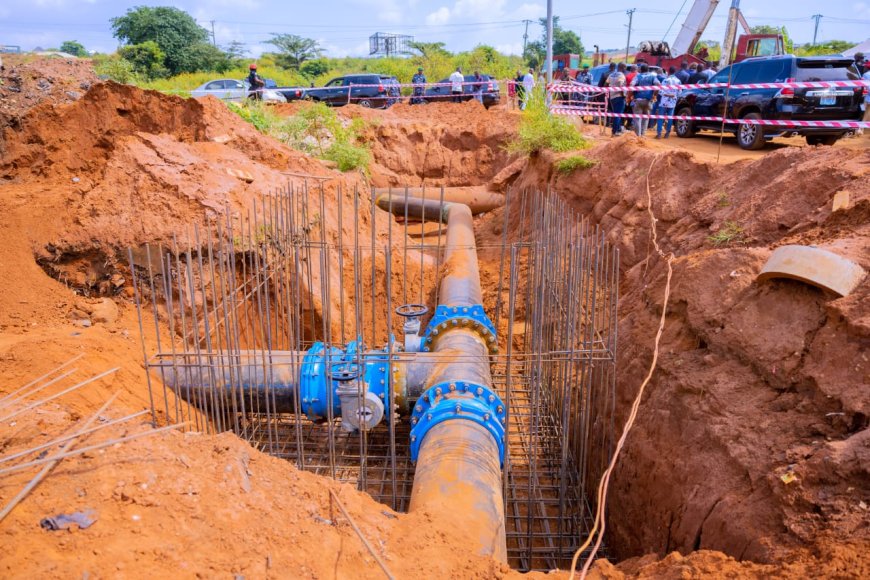
The coming of Peter Mbah brought the needed recipe to this problem. The strong man of the challenge, pipe leakage, has been taken head-on. Gov. Mbah is currently embarking on the rechanneling of all water pipes in the city and expanding the same to capture uncharted territories. New and more durable pipes are rapidly being installed. A lot of revamp work to confront current and future challenges is presently ongoing. And let's be truthful to ourselves, these can't be completed in 180 days. In fact, we are even lucky that we now have a government giving the township water supply deserving attention after several decades of neglect. This should attract commendation, not condemnation, ordinarily. It is not something to play politics with. Mbah should rather be encouraged to continue. This is the only way we can ensure the completion of the project. We can't afford to have this project truncated for any reason. If only our governments from 1996 to 2023, continued the initial trend of constantly improving the water scheme for the people, we would not have gotten to this stage. Now that governance is back, and our water schemes are getting a top priority, we must not allow politics to destroy things for us. I hereby submit that anybody who wants to use the Enugu water problem to campaign against the government of Peter Mbah should first and foremost summon all those who have held sway before Mbah to ascertain why they refused to make a single effort to give the Enugu people water.
This is the essence of this write-up in which I have traced the origin of the Enugu water problem. It is a result of long years of abandonment, neglect, and irresponsible leadership. I have always argued that it was never a topological problem as concocted to deceive the people. From 1924 to 1996, the government kept introducing new water schemes and improving on old ones to keep up with increasing demand. Though the water supply then was not sufficient due to population increase, the government's efforts were always successful when completed. Can anyone mention any successful water scheme completed by any government from 1997 to 2023??? None to the best of my knowledge. Why then did we think that our water crisis would not increase with time? So it is never about Peter Mbah and any 180 days. It is about those who abandoned their responsibility when they were in government. We won't allow this to happen again. In the future, we must find a way for every government to maintain the water legacy that Governor Mbah will leave by 2031. It will no longer be business as usual. This stress Gov. Mbah is taking to lay a fresh foundation for water availability in Enugu will be guarded with everything we can have. The direct implication of this neglect is that Gov. Mbah is being faced with the task of doing everything done from 1924 to 1996, and the ones left undone from then to 2023, in order to get water back into Enugu. The cost is huge. It won't be so if every government before Gov. Mbah had done its bit.
In summary, I believe that after going through this, you would have understood the origin of the current water scarcity in Enugu and equally Gov. Peter Mbah's efforts to end it. Henceforth, it is expected that whenever the blame for such a lack of one of the necessities of man is needed, it should be placed at the appropriate quarters and not on Gov. Peter Ndubuisi Mbah. Very important.
Agbo, a public affairs analyst and commentator on critical issues hails from Isi-Uzo, Enugu State
What's Your Reaction?
 Like
1
Like
1
 Dislike
0
Dislike
0
 Love
0
Love
0
 Funny
0
Funny
0
 Angry
0
Angry
0
 Sad
0
Sad
0
 Wow
0
Wow
0