

















TINUBU'S ECONOMIC REFORMS: BEYOND THE PAIN, WHAT LIES AHEAD FOR NIGERIANS?
These concerns deserve understanding, not political arguments or attempts to dismiss genuine public dissatisfaction


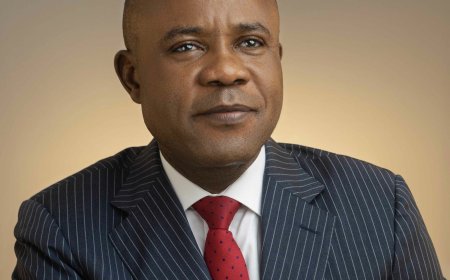
By Chief Anthony Akubueze Mba


Nigeria is passing through a difficult economic period, and no responsible government or political leader should pretend otherwise. The hardship experienced by millions of Nigerians is real. The rising cost of food, transportation, electricity, housing, education and healthcare has placed enormous pressure on households and businesses.
For many families, survival has become a daily struggle. Small businesses are battling rising operating costs, workers are struggling with reduced purchasing power, and parents are finding it increasingly difficult to meet their children's educational and other essential needs.
These concerns deserve understanding, not political arguments or attempts to dismiss genuine public dissatisfaction.
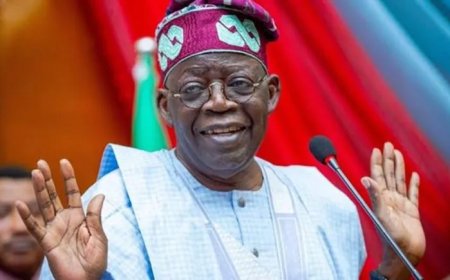
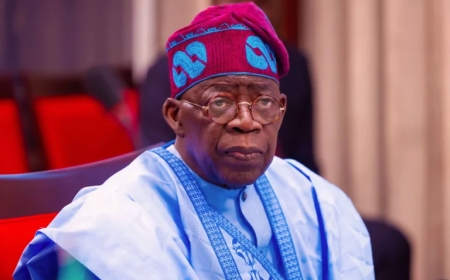
However, as we assess the economic situation, we must also examine the circumstances that necessitated the reforms introduced by President Bola Ahmed Tinubu in May 2023, the progress recorded so far and, more importantly, what government must do to ensure that Nigerians begin to enjoy the benefits.
WHY THE REFORMS?
When President Tinubu assumed office, Nigeria was confronted with serious structural economic problems, including an unsustainable petrol subsidy burden, multiple foreign exchange rates, inadequate government revenue and increasing debt-service obligations.
The removal of petrol subsidy and the foreign exchange reforms were introduced to address these longstanding distortions, improve government revenue, attract investment and establish a more sustainable economic foundation.
These were difficult decisions, and their immediate consequences were painful. However, it is important to distinguish between the objectives of economic reforms and the difficulties associated with their implementation.
ARE THERE SIGNS OF PROGRESS?
Available economic reports indicate that some improvements are emerging.
According to the World Bank's October 2026 Nigeria Development Update, the economy grew by 4.2 per cent in the first half of 2026, compared with 3.9 per cent during the corresponding period of 2025.
Nigeria's external reserves also rose above $54 billion in September 2026, while the foreign exchange market has become more stable.
The World Bank further reported that government revenues increased by 69 per cent in real terms between 2023 and 2025, largely reflecting the effects of subsidy removal, foreign exchange reforms and improved revenue administration.
More recently, the National Bureau of Statistics reported that headline inflation declined to 14.06 per cent in October 2026, compared with 14.63 per cent in September.
These developments are encouraging. Nevertheless, we must not confuse declining inflation with falling prices. Nigerians are still paying substantially more for many essential commodities than they did before the reforms.
The real challenge is translating macroeconomic improvements into better household incomes and affordable living conditions.
WHERE HAVE THE ADDITIONAL REVENUES GONE?
One question that continues to trouble Nigerians is what happened to the money saved from petrol subsidy removal.
The Federal Ministry of Finance's August 2026 Economic Reform Scorecard estimated subsidy savings of approximately ₦15.83 trillion between June 2023 and December 2025.
The estimated distribution was ₦5.43 trillion to the Federal Government, ₦6.52 trillion to state governments and ₦3.88 trillion to local governments.
This is significant because the additional resources were not retained by the Federal Government alone.
Consequently, accountability must extend to all three tiers of government. State and local governments must demonstrate how the additional resources have improved roads, healthcare, education, agriculture, water supply and other essential services.
The Federal Government must equally ensure that its expenditure produces measurable development outcomes.
INFRASTRUCTURE AND ECONOMIC DEVELOPMENT
Investment in infrastructure remains essential to Nigeria's economic recovery.
Roads, railways, electricity, ports, irrigation and other productive facilities are necessary to reduce business costs, improve agricultural distribution, encourage investment and create employment.
The Federal Government's economic reform scorecard identifies substantial expenditure on strategic infrastructure, including the Lagos-Calabar Coastal Highway, Sokoto-Badagry Superhighway and other major road projects.
However, infrastructure spending must be accompanied by transparency, proper supervision and value for money.
Nigerians should be able to see not just the amounts budgeted or announced but the projects completed and the benefits delivered.
WHAT MUST HAPPEN NEXT?
This is where the administration must demonstrate greater urgency.
The next phase of the Renewed Hope Agenda should focus more directly on the welfare of ordinary Nigerians.
Agricultural production must receive greater attention through affordable fertilisers, improved seedlings, mechanisation, irrigation, rural roads and accessible financing.
Electricity supply must improve to reduce the burden on manufacturers, small businesses and households.
Government must intensify efforts to create employment, support small businesses, improve transportation and expand social protection for vulnerable citizens.
Equally important is responsible debt management. Borrowing must be directed towards productive investments capable of generating economic returns rather than creating unnecessary obligations for future generations.
The Federal Government must also encourage state and local governments to use their increased revenues more effectively.
A CALL FOR PATIENCE, ACCOUNTABILITY AND SHARED RESPONSIBILITY
Nigeria's economic problems are deep-rooted and cannot be resolved overnight. Nevertheless, patience should not be interpreted as an excuse for poor performance, just as constructive criticism should not be mistaken for opposition or disloyalty.
The government must listen to the people, acknowledge shortcomings and demonstrate a stronger commitment to improving their living conditions.
On their part, Nigerians should assess the reforms objectively, distinguish between genuine economic progress and political propaganda, and demand accountability from every level of government.
The success of the Renewed Hope Agenda should not be measured by impressive economic statistics alone. It must be measured by whether families can afford food, young people can secure meaningful employment, farmers can make profitable investments, businesses can grow and workers can enjoy better purchasing power.
The ultimate purpose of economic reform is not to make government financially comfortable while the people remain impoverished. It is to build an economy in which national prosperity is shared and ordinary citizens can live with dignity.
President Tinubu's administration has recorded some measurable improvements in economic stability and public revenue. The task now is to ensure that these gains translate into tangible benefits for Nigerians.
Nigeria deserves an economy that works for everybody, not just the privileged few.
That should be our collective expectation and the standard by which the Renewed Hope Agenda must ultimately be judged.
What's Your Reaction?
 Like
0
 Dislike
0
 Love
0
 Funny
0
 Angry
0
 Sad
0
 Wow
0