












60 Years After: Remembering Aguiyi-Ironsi's Last Appearance Before Assassination
The assassination of Aguiyi-Ironsi marked a major turning point in Nigeria's political history, triggering a succession of events that culminated in the Nigerian Civil War

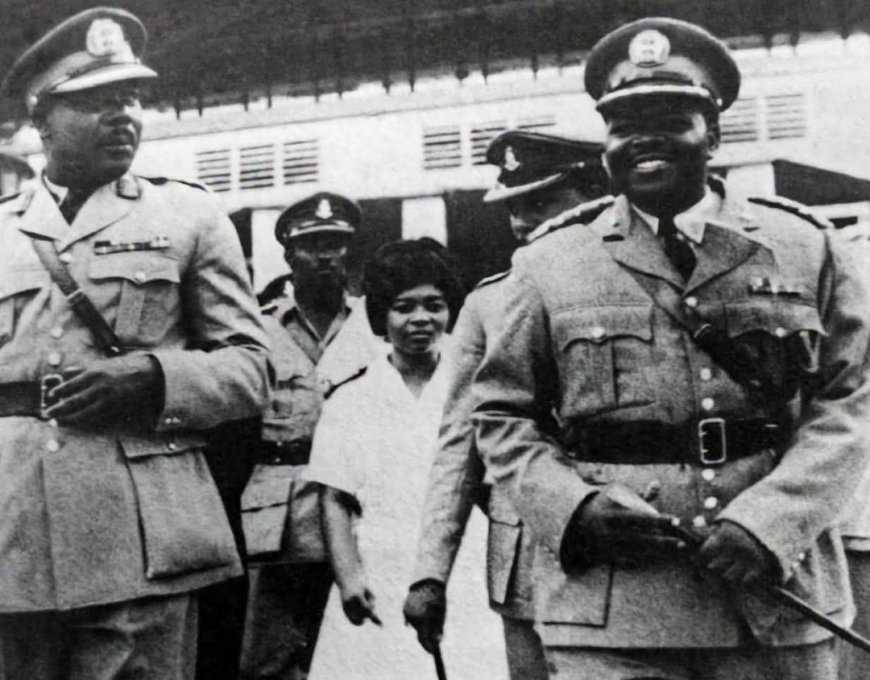
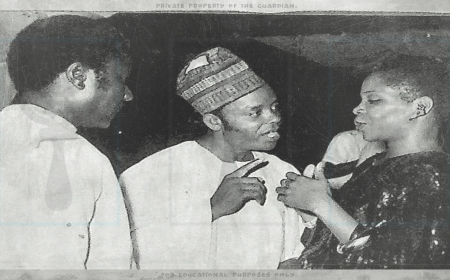
Sixty years after the assassination of Nigeria's first Military Head of State, Major-General Johnson Thomas Umunnakwe Aguiyi-Ironsi, fresh attention has been drawn to the events surrounding his final public engagement before he was killed during the military counter-coup of July 29, 1966.


On July 29, 1966, Aguiyi-Ironsi travelled to Ibadan to officially declare open a two-day conference of Nigeria's traditional rulers, unaware that it would be his last official assignment as Head of State.
Addressing the gathering, the Supreme Commander urged Nigerians to embrace patriotism, discipline and national unity, stressing that the country's future depended on placing the national interest above ethnic, regional and political loyalties.
He also announced plans to accord greater respect to the Nigerian National Anthem, revealing that schools across the country would soon be directed to sing the anthem at both the beginning and end of each school day.
Reflecting on the political crisis that led to the January 1966 military takeover, Aguiyi-Ironsi criticised the political class for allowing partisan interests to overshadow the unity of the country. He lamented that political and regional divisions had deepened, weakening the cohesion of the young nation.
The military leader also expressed concern that some traditional rulers had become aligned with political interests, arguing that such involvement had undermined the neutrality and dignity historically associated with the traditional institution.
Recalling the security situation before the January coup, Aguiyi-Ironsi described a country where law and order had deteriorated in several areas, making movement unsafe for citizens and exposing lives and property to violence. According to him, restoring peace, security and stability remained the foremost objective of his administration.
Unknown to the Head of State, however, a group of military officers had already launched a counter-coup that would end his six-month administration.
In the early hours of July 29, 1966, Aguiyi-Ironsi and his host, Lieutenant Colonel Francis Adekunle Fajuyi, then Military Governor of the Western Region, were arrested in Ibadan and later killed.
Fajuyi has since been widely remembered for refusing to abandon his guest despite opportunities to save himself, choosing instead to remain with Aguiyi-Ironsi until they were both executed.
The assassination of Aguiyi-Ironsi marked a major turning point in Nigeria's political history, triggering a succession of events that culminated in the Nigerian Civil War and permanently reshaped the country's political landscape.
What's Your Reaction?
 Like
0
Like
0
 Dislike
0
Dislike
0
 Love
0
Love
0
 Funny
0
Funny
0
 Angry
0
Angry
0
 Sad
0
Sad
0
 Wow
0
Wow
0