





























Enugu Judge, Nnamani, Warns Against Judicial Interference in Elections
He expressed concern that courts were increasingly assuming decisive roles in electoral matters, including party registration, candidate eligibility and the determination of election outcomes, functions that should ordinarily be handled by electoral management bodies within the law

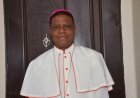
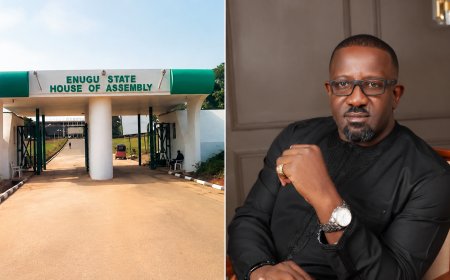
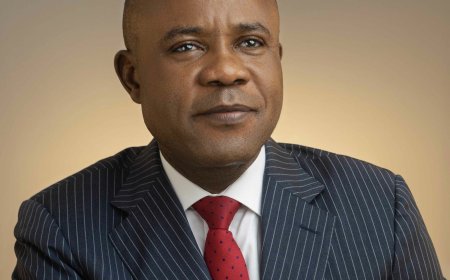
The President of the Enugu State Customary Court of Appeal, Justice George Nnamani, has warned that the growing judicialisation of elections in West Africa threatens citizens’ democratic rights by undermining their power to choose their leaders.


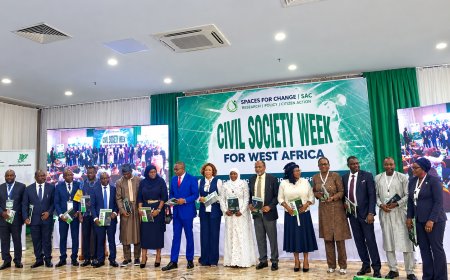
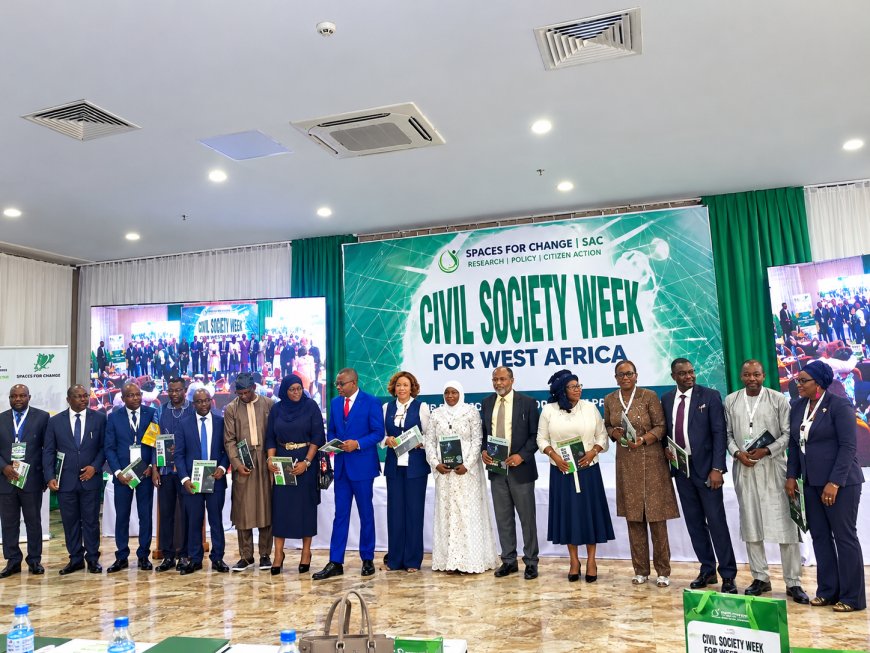
Nnamani gave the warning on Thursday while delivering the keynote address at the fourth edition of the Civil Society Week for West Africa (CSWWA 2026), organised by Spaces for Change (S4C) in Enugu under the theme, “Strengthening Judicial Protection of Civic Space in West Africa.”
He expressed concern that courts were increasingly assuming decisive roles in electoral matters, including party registration, candidate eligibility and the determination of election outcomes, functions that should ordinarily be handled by electoral management bodies within the law.
“When judicial decisions dictate who can contest and who is excluded, citizens are effectively stripped of their fundamental agency to choose their leaders,” he said, warning that the trend undermined freedom of association and assembly.
The jurist also cautioned against executive overreach backed by judicial decisions, observing that repression could assume the appearance of legality when the courts failed to adequately protect constitutional rights.
Earlier, the Executive Director of Spaces for Change West Africa, Victoria Ibezim-Ohaeri, raised concerns over what she described as the increasing weaponisation of judicial processes to suppress civic participation across the sub-region.
Citing S4C’s report, Civic Space in West Africa: Trends, Threats & Futures (2nd Edition), she disclosed that cases of judicially backed human rights violations had risen from nine over six years to 70 in less than three years, representing an increase of nearly 700 per cent.
According to her, legal processes are increasingly being used to weaken public movements, discredit opposition figures and provide justification for state-sponsored crackdowns.
Ibezim-Ohaeri also expressed concern over the use of anti-terrorism laws, citing Nigeria’s 775 terrorism-related convictions in 2025, alongside what she described as similarly high figures in Mali and Burkina Faso.
She insisted that the pursuit of national security must not become an excuse for violating fundamental human rights.
The S4C director further condemned the growing use of Strategic Litigation Against Public Participation (SLAPPs), which she described as legal actions intended to intimidate, financially exhaust and silence journalists, whistleblowers and grassroots activists.
On judicial independence, Nnamani identified financial autonomy as a critical requirement for protecting the judiciary from external interference and strengthening the rule of law.
Describing judicial funding as the “crankshaft of the rule of law,” he commended the Enugu State Government for implementing judicial financial autonomy.
He, however, criticised situations in which judges are compelled to seek funds from other arms of government to perform their duties, warning that such dependence weakens the judiciary’s independence and effectiveness.
Ibezim-Ohaeri called on participants, including judges and civil society representatives from about 20 countries, to develop practical strategies for strengthening judicial independence and resisting the use of legal institutions to suppress civic freedoms.
“Democracy cannot survive without an independent judiciary that courageously defends constitutional rights and freedoms and ensures every voice is heard,” she said.
What's Your Reaction?
 Like
0
 Dislike
0
 Love
0
 Funny
0
 Angry
0
 Sad
0
 Wow
0