




































Beyond the Crown: The Vision Shaping Asaba’s Future
Prof. Azinge's journey to the throne did not begin with royalty. It passed through scholarship, law, intellectual inquiry, institution-building and years of engagement

By Ikenwa Charity O.


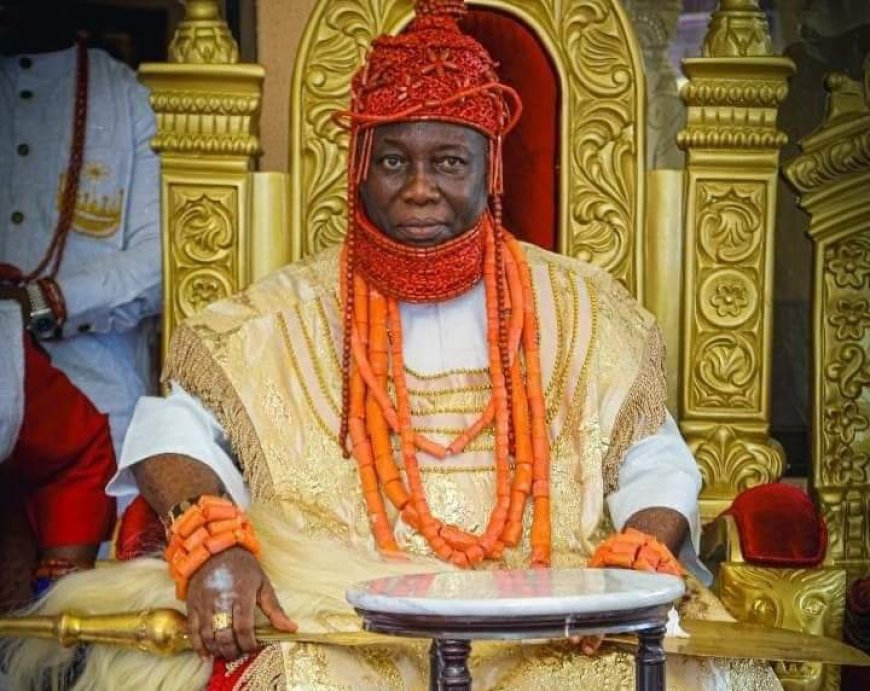
Beyond the crown lies the vision shaping Asaba’s future, a vision that sees kingship not as an inheritance of privilege, but as a solemn responsibility to the people, to history and to generations yet unborn. In the reign of His Royal Majesty, Prof. Epiphany Chigbogu Azinge, SAN, OON, FNIALS, the 14th Asagba of Asaba, the traditional throne is increasingly revealing another dimension: the quiet power of a man who appears to understand that to inherit a community is to accept responsibility for what it will become.
There are men who enter history by seeking it, and there are others who find themselves entrusted with a place in it and then spend their lives trying to honour that trust. Prof. Azinge belongs to the latter. His journey to the throne did not begin with royalty. It passed through scholarship, law, intellectual inquiry, institution-building and years of engagement with difficult questions of governance and society.
By the time he ascended the throne of Asaba, he had already spent a lifetime studying the architecture of institutions and the consequences of leadership.
Perhaps that explains something essential about his reign: he does not appear to look at the throne merely as a seat. He looks at it as a responsibility. And responsibility changes the way a man sees power.
There is an intriguing paradox about traditional authority in the modern world. A king inherits an ancient institution but must exercise leadership within a society that is anything but ancient. Around him are smartphones, artificial intelligence, global capital, restless young people, changing social values, unemployment, technological disruption and an increasingly impatient demand for results. The challenge, therefore, is not simply to preserve a throne. It is to make the throne meaningful in the age in which it exists.
This appears to be one of the defining questions of Azinge's reign. He has inherited the history of Asaba, but he has also inherited its anxieties, aspirations and unfinished business. Rather than treating those responsibilities as separate from kingship, he appears to have woven them into its meaning. “If I am not all about the development of Asaba, what will that make me as the Asagba?” he once asked.
Few statements explain a reign as clearly as this one. It is not the language of entitlement; it is the language of obligation. The question is revealing because it turns the meaning of kingship inward. What is the value of a crown if the people beneath it do not prosper? What is the relevance of royal authority if it cannot help a community find direction? What does tradition mean if it cannot protect the dignity of the people who inherited it? For Azinge, the answer appears to be that the throne must serve.
Intellectual men often carry a peculiar relationship with consequence. They understand that decisions made today rarely end today. Policies become institutions; institutions influence generations; words spoken by leaders become principles remembered by communities; and a single intervention can alter the direction of a life. That temperament seems visible in Asagba's approach to leadership.
His interventions span healthcare, education, youth empowerment, social welfare, culture, investment, tourism, sports, technology and community development. Yet the significance of these interventions lies less in their number than in what they reveal about the mind behind them. There appears to be an underlying conviction that development must be comprehensive. A community cannot be truly prosperous if its people are sick. It cannot be secure in its future if its children are poorly educated. It cannot be economically confident if its young people lack opportunities. It cannot become modern by abandoning its identity, nor can it preserve its identity by refusing to evolve.
This is where the character of the reign becomes particularly interesting. The projects may be visible, but the philosophy behind them is deeper.
Perhaps one of the most revealing aspects of Azinge's leadership is his philosophy about personal relationships and public responsibility. Leadership often becomes complicated when friendship, loyalty and communal interest collide. The temptation to favour those close to power is as old as power itself. But the Asagba has articulated a principle that places the kingdom above private considerations: “The progress and wellbeing of Asaba must always supersede friendship, personal interests or individual considerations.”
There is restraint in that position. It suggests an understanding that the throne cannot belong to a man's friendships. A king may have friends, but he cannot make the interests of his friends the measure of justice. He may have personal preferences, but the welfare of the kingdom must be larger than those preferences. He may be surrounded by people who love him, but the responsibilities of the crown must extend to people who do not know him personally.
That distinction is fundamental to statesmanship and perhaps one of the reasons his philosophy of development carries such weight. The kingdom must come first.
It is easy to speak about development in the language of statistics. It is harder to remember that behind every statistic is a human being. A dialysis machine is not simply medical equipment when someone is fighting to stay alive. A scholarship is not simply an educational intervention when a talented young person might otherwise abandon university. A bursary is not merely financial assistance when it allows a family to keep a child in school. An ambulance is not simply a vehicle when minutes can determine whether a patient survives. A rehabilitation centre is not simply a building when it offers someone battling addiction a pathway back to dignity.
This human understanding appears to animate several of the interventions associated with the Asagba's reign. The provision of dialysis machines reportedly valued at more than ₦1 billion, support for primary healthcare, engagement of healthcare personnel, ambulance services and the establishment of a Drug Rehabilitation Centre reveal a conception of leadership that begins with the vulnerability of the individual. The same philosophy appears in support for widows, vulnerable citizens and young people.
Development, in this conception, is not merely about making a place look better. It is about making life better.
There is perhaps no greater expression of foresight than the decision to invest in people whose achievements may not be visible for decades. Education is therefore one of the quietest but most consequential dimensions of Asagba's vision.
Scholarships, bursaries and support for schools and tertiary institutions may not always produce dramatic headlines, but their effects can travel through generations. A child who remains in school can become a professional. A professional can create employment. A business owner can support a family. A family can educate another generation. A single educational opportunity can therefore become a chain of possibilities extending far beyond the original beneficiary.
For a man whose life has been immersed in scholarship, this long view is understandable. “The true wealth of Nigeria lies not beneath her soil but within the minds of her children.” It is a statement that captures more than an educational philosophy; it captures a philosophy of nation-building.
The wealth of Asaba, too, cannot ultimately be reduced to buildings, roads or commercial activity. Its greatest wealth resides in the capacity of its people to think, create, innovate, lead and preserve the values that bind the community together.
As a king who looks beyond his reign, the most important question to ask of any leader is not what he is building for himself, but what he is building that will remain after him. That is where posterity enters the story.
The proposed ₦10 billion Asagba Palace Project, for instance, can be viewed beyond architecture. A palace can become a physical expression of collective memory, a place where the history of a people is preserved and where future generations can encounter the story of those who came before them.
The same thinking can be seen in efforts to strengthen the Palace Museum, preserve cultural practices and revive traditions that risk disappearing from communal memory.
The revival of Igbamkpisi and the historic Izu-Okuko ceremony are therefore more than cultural events; they are conversations with history. They tell younger generations that modernity does not require cultural amnesia. A people can move forward without walking away from themselves.
The cultural calendar and traditional institutions of Asaba offer other expressions of this continuity. Festivals such as Eze Ugbo, Ichu-Ulor and Iwaji, alongside the Inauguration of Otu-Ihaza, an event that takes place every 10 years, represent different dimensions of communal identity, continuity and renewal. Together with the restoration of long-dormant customs, they reinforce the idea that culture is not something to be displayed occasionally but something to be lived, transmitted and responsibly preserved.
That balance may be one of the most delicate responsibilities of traditional leadership.
The king must preserve what deserves preservation while recognising what must change. He must honour the past without becoming imprisoned by it. He must prepare for the future without allowing the present to become forgotten.
There is another dimension to this vision: the desire to make Asaba known not merely as a geographical location or administrative capital, but as a community with an identity capable of attracting people, ideas and opportunities.
Engagement with corporate institutions and potential investors reflects an understanding that development requires connections beyond the immediate community. The Asaba Annual International Marathon, the proposed Sports Academy, tourism initiatives and efforts to enhance public spaces all point towards a broader ambition. The ambition is visibility, but not visibility for vanity's sake. It is visibility that creates opportunity.
A city that attracts visitors creates opportunities for hospitality businesses. A community that attracts investment creates employment.
A place that celebrates its culture strengthens tourism. A city that produces sporting talent creates possibilities for young people. This is the subtle difference between beautification and strategic development: the former improves appearance; the latter changes prospects.
But development also requires order. One of the less celebrated dimensions of Asagba's vision is the attention being given to town planning and the physical organisation of Asaba.
From the Palace, town planning has increasingly been treated as part of the larger development conversation,an understanding that a growing community cannot be left to expand without order, foresight and regard for the environment. The effort to encourage a more properly planned Asaba speaks to a leadership concerned not only with what the city looks like today, but with how safely, efficiently and sustainably it will accommodate generations to come.
That same sense of responsibility extends to security and sanitation. A community cannot attract investment, protect livelihoods or sustain development if its people do not feel secure, while a beautiful city loses much of its value when environmental neglect threatens public health.
The Asagba's attention to security, cleanliness and sanitation therefore belongs to the same philosophy of people-centred development. The message is simple: protecting lives, maintaining order and keeping the environment clean are not peripheral duties; they are essential foundations of a healthy and dignified community.
One of the most compelling features of Azinge's reign is the apparent refusal to accept the false choice between tradition and modernity. The two are often presented as opposites, but perhaps they do not have to be.
The introduction of electric vehicles into community service speaks to an openness to innovation. The pursuit of investment speaks to economic modernisation. The proposed Sports Academy speaks to the future. The museum speaks to memory. The revival of traditional rites speaks to identity. Healthcare speaks to humanity. Education speaks to posterity.
Together, they tell a more complete story. The story is not about abandoning the old for the new; it is about determining what from the old should accompany the people into the new. That is a profoundly different understanding of tradition.
There is also work that does not always produce photographs: peacebuilding, mediation, dialogue and reconciliation. These are among the least glamorous responsibilities of leadership, yet they may be among the most important.
Dispute resolution is, in many ways, a cornerstone of the Asagba Azinge administration.
Thankfully, the man on the throne brings to this responsibility an unusual depth of expertise. As a foremost expert in customary law, his intellectual grounding gives him a particularly strong understanding of the customs, principles and social relationships that shape communal disputes. His edited work, Restatement of Customary Law, speaks to the depth of that scholarship and the expertise that informs his approach to resolving conflicts. In a community where disputes can quickly become complicated by history, land, relationships and competing interests, the ability to understand the law, the people and the customs surrounding a dispute can provide a critical pathway towards reconciliation.
A community cannot develop where mistrust becomes permanent. Investors cannot thrive in instability. Families cannot prosper in constant conflict. Young people cannot build futures in an atmosphere of fear.
Traditional rulers possess a unique moral space in such situations because their authority is rooted not only in formal structures but also in history and identity.
The Asagba's engagement in disputes and community disagreements therefore belongs to the same development story.
Peace is not separate from development. Peace makes development possible.
There are rulers whose names are remembered because they occupied a throne. There are others whose names remain because they changed what the throne meant. The distinction is profound.
The first leaves behind a title. The second leaves behind an idea.
Perhaps the emerging idea from the reign of Prof. Epiphany Azinge is that traditional authority can be simultaneously ancient in origin and modern in purpose. It can preserve culture and pursue innovation. It can respect hierarchy and promote inclusion. It can honour history while preparing for the future. It can wield influence without becoming political power. It can speak for a community without speaking above the community.
That is a delicate balance. It requires more than intelligence. It requires temperament. It requires restraint. It requires the ability to listen. It requires the discipline to place the larger good above the immediate satisfaction of personal preference. It requires, ultimately, a conception of leadership as service.
History is patient. It does not rush to praise leaders merely because they are popular in their own time. Posterity examines what survived.
Did institutions endure? Did lives improve? Did the young find opportunities? Did culture remain alive? Did the vulnerable receive protection? Did the community become more confident about its future? Did the leader leave behind something larger than himself?
Those are questions no contemporary applause can answer. They belong to time.
And time will eventually judge the reign of the 14th Asagba of Asaba. But even now, there is a discernible quality to the vision emerging from his throne: an insistence that leadership must be useful, not merely impressive, not merely ceremonial, but useful to the child who needs an opportunity, the patient who needs care, the young person searching for a livelihood, the investor looking for a destination, the community seeking peace, the culture searching for continuity and generations that have not yet arrived. That may be the most profound measure of kingship.
In the final analysis, the story of Prof. Epiphany Chigbogu Azinge is not simply the story of a professor who became a monarch. It is the story of a man who appears to have carried an intellectual understanding of responsibility into an institution built on tradition.
He inherited a crown, but he seems determined to leave behind capacity. He inherited history, but he is working to give history a future. He inherited a community, but he appears to see it as something entrusted to him rather than something that belongs to him.
That distinction separates possession from stewardship. And stewardship is perhaps the noblest language of kingship.
The Asagba's philosophy can therefore be understood through one enduring idea: a throne is not the highest point of a man's journey; it is the point at which his responsibility becomes larger than himself.
That is why the question, “If I am not all about the development of Asaba, what will that make me as the Asagba?” resonates beyond its immediate context. It is not simply a statement about development; it is a definition of duty.
It says that friendship must not eclipse fairness; personal interest must not outrank communal wellbeing; tradition must not become stagnation; development must reach the vulnerable; institutions must outlive individuals; and leadership must always keep an eye on those who are yet to inherit the consequences of today's decisions.
Perhaps, then, the most fitting tribute to the 14th Asagba is not to catalogue everything he has done, but to recognise the philosophy connecting them: a philosophy that sees Asaba not merely as a place to govern, but as an inheritance to protect, a community to strengthen and a future to prepare.
Beyond the crown is the man. Beyond the man is the responsibility. And beyond the responsibility lies posterity.
That is where the true measure of this reign will ultimately be found.
For when history eventually turns its gaze upon this chapter of Asaba's story, the most important question may not be how magnificent the throne appeared, but what became of the people who lived beneath it.
And that is where a king's legacy begins.
What's Your Reaction?
 Like
0
Like
0
 Dislike
0
Dislike
0
 Love
0
Love
0
 Funny
0
Funny
0
 Angry
0
Angry
0
 Sad
0
Sad
0
 Wow
0
Wow
0