
































Court Rescues Nigeria's Democracy, Nullifies INEC’s Asphyxiating Guidelines
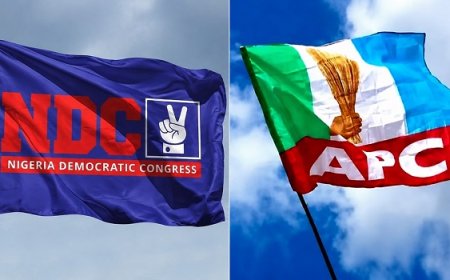
There is palpable joy among political parties in the country as an Abuja High Court has nullified aspects of INEC'S guidelines which put many parties on tight corner ahead of the next general elections.


Our Reporter


Nigerian political parties can now breath freely as a Federal High Court sitting in Abuja has nullified key provisions of the Independent National Electoral Commission’s (INEC) revised timetable for the 2027 general elections.
In a judgment widely viewed as a significant development for Nigeria’s democratic process and political party operations.
The landmark ruling, delivered on Wednesday by Justice Mohammed Umar, struck down aspects of INEC’s election schedule considered inconsistent with provisions of the Electoral Act, 2026, potentially creating new opportunities for aggrieved aspirants and political actors ahead of the next general elections.
Prior to the ruling, practically all the political parties in the country were put on high jump as they race against time to meet INEC's tight electoral schedule as contained in her guidelines.
The court’s decision followed a suit instituted by the Youth Party against the Independent National Electoral Commission, challenging the commission’s authority to impose timelines beyond what is expressly provided by law.
In the suit marked FHC/ABJ/CS/517/2016, the plaintiff argued that INEC lacked statutory powers to introduce restrictive deadlines intended to limit candidate substitutions and post-primary political movements ahead of the 2027 polls.
Delivering judgment after hearing submissions from counsel to the plaintiff, J.O. Olotu, and counsel to INEC, Sarafa Yusuf, Justice Umar held that the electoral body cannot supersede provisions already guaranteed under the Electoral Act.
The court specifically ruled that Section 29(1) of the Electoral Act, 2026 permits political parties to submit candidates’ particulars up to 120 days before an election, adding that INEC lacks the authority to reduce that statutory window through administrative guidelines.
“INEC cannot lawfully abridge or limit that statutory period by prescribing a shorter timeframe in its 2027 election timetable,” the judge ruled.
Justice Umar further held that under Section 31 of the Electoral Act, political parties retain the legal right to withdraw and replace candidates up to 90 days before an election, stressing that such statutory rights cannot be curtailed by directives issued by the electoral commission.
The court also ruled that INEC lacks the legal authority to publish the final list of candidates outside the minimum 60-day period prescribed by law.
In another major aspect of the judgment, the court declared that INEC does not possess powers under Section 98 of the Electoral Act to compel political campaigns to end exactly two days before elections.
“A Declaration is made that upon the proper construction of Section 98 of the Electoral Act, 2026, the defendant does not possess the statutory authority to fix in its timetable for the 2027 general elections for campaign to end two days before the elections,” the court held.
The judge also ruled that timelines relating to the submission of party membership registers do not apply to primaries conducted for the purpose of replacing withdrawn candidates.
Consequently, the court issued an order nullifying all aspects of INEC’s revised timetable deemed inconsistent with the Electoral Act.
“An order is hereby made setting aside or nullifying the time-frames imposed by the defendant in its Revised Timetable and Schedule of Activities for the 2027 General Election… which is inconsistent with the provisions of the Electoral Act, 2026,” Justice Umar ruled.
The judgment is expected to generate fresh political calculations across major parties, particularly amid disputes arising from recent primary elections involving allegations of candidate imposition, protests, and withdrawals by dissatisfied aspirants.
Before the ruling, INEC had directed political parties to submit membership registers by May 10 and conclude primaries, candidate substitutions, and withdrawals before the end of May.
Political observers believe the judgment may create new legal pathways for dissatisfied aspirants seeking alternative platforms or fresh opportunities ahead of the 2027 general elections.
What's Your Reaction?
 Like
0
Like
0
 Dislike
0
Dislike
0
 Love
0
Love
0
 Funny
0
Funny
0
 Angry
0
Angry
0
 Sad
0
Sad
0
 Wow
0
Wow
0