











































DANGER! IMF Warns Rising Essentials Cost 'll Push More Nigerians Into Poverty
The IMF maintained its forecast for Nigeria's economic growth at 4.1% in 2026 and 4.3% in 2027


The International Monetary Fund (IMF) has warned that rising prices of essential goods are expected to worsen poverty and food insecurity in Nigeria, even as the country's economy shows signs of improved macroeconomic stability.


In its July 2026 World Economic Outlook Update, the IMF maintained its forecast for Nigeria's economic growth at 4.1% in 2026 and 4.3% in 2027. The Fund said reforms and improved macroeconomic conditions are supporting the economy, alongside favourable terms of trade.
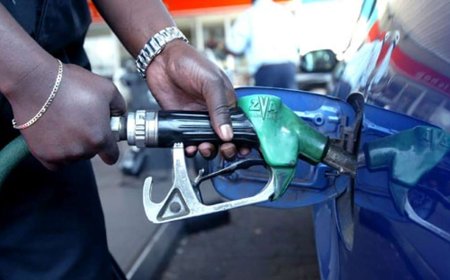
However, it cautioned that the benefits of economic stabilization may not be felt by many households because the increasing cost of food, energy and other essential commodities continues to erode purchasing power.
According to the IMF, growth across Sub-Saharan Africa is projected to remain broadly stable at 4.3% in 2026 and 4.5% in 2027, although performance will vary significantly among countries depending on policy implementation, reform progress and exposure to external shocks.
The Fund noted that oil-importing and non-resource-intensive economies are facing greater pressure from higher food and energy prices, while some larger economies—including Nigeria—are benefiting from earlier macroeconomic reforms.
Nevertheless, it observed that many African countries remain largely excluded from the productivity gains associated with the global artificial intelligence (AI) boom and continue to face reduced official development assistance.
Globally, the IMF revised its growth outlook downward, projecting world economic growth at 3.0% in 2026 and 3.4% in 2027, compared with the average 3.5% growth recorded in 2024 and 2025.
The downgrade reflects the economic impact of the conflict in the Middle East, although stronger demand driven by advances in artificial intelligence is expected to provide some support to global activity.
The Fund also warned that global inflation is likely to rise from 4.1% in 2025 to 4.7% in 2026 before easing to 3.9% in 2027, signalling that the earlier trend of declining inflation has stalled.
Looking ahead, the IMF identified renewed geopolitical tensions in the Middle East as a major downside risk, warning that further conflict could increase commodity price volatility, disrupt supply chains, tighten financial conditions and fuel inflation.
It also cautioned that increasing trade fragmentation could weaken global output while pushing prices higher. To address these challenges, the IMF urged governments to restore price stability, rebuild fiscal buffers, strengthen energy security, improve readiness for artificial intelligence and deepen international cooperation.
What's Your Reaction?
 Like
0
Like
0
 Dislike
0
Dislike
0
 Love
0
Love
0
 Funny
0
Funny
0
 Angry
0
Angry
0
 Sad
0
Sad
0
 Wow
0
Wow
0