
























Integrity: An Orphan in a Captured State
" _We can have democracy in this country, or we can have great wealth concentrated in the hands of a few, but we can't have both."_ — Louis Brandeis, U.S. Supreme Court Justice


By Ike Abonyi


It was once rightly stated that when criminals hijack power and rule, truth goes into hiding. The presidential campaign council list recently released by the ruling All Progressives Congress (APC) copiously underscores one fundamental truth about our current political system: the immense cost of integrity in a captured state, and the regrettable fact that when criminals rule, truth and honesty shrink.
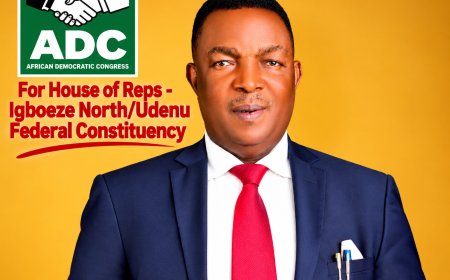
Having spent four decades in the political arena—both in the newsroom as a political reporter and inside political parties as a technical hand—I am not entirely oblivious to the intrigues currently unfolding ahead of the crucial 2027 presidential election. Since the return to civilian rule in 1999, I have been part and parcel of the process, though firmly as a non-partisan observer. My refusal to enter active partisan politics stems directly from what I have witnessed over decades in the field. The core takeaway from my experience is that politicians across the board are strikingly predictable in their dishonesty. Whether Christian or Muslim, Igbo, Yoruba, or Hausa, their appetites remain identical. They may disagree fiercely on policy, but they never disagree on sharing the loot. Yet, there remains one constant force in Nigerian politics—invisible, yet invincible—whom political actors routinely ignore: God. In His omniscience, God allows mortals to play their hands while he watches patiently, ultimately revealing who holds power. Beyond the bold headlines and titles of "Your Excellency," "Distinguished," or Honourable, more than half of the politicians who have abused power since 1999 live in quiet misery today, despite their deep pockets. What prompts this week’s edition of Political Musing is the excitement generated by the APC flag-bearer’s campaign council list. It reads like a Who’s Who of Nigerian political history since 1999. The objective behind this bloated roster is simple: to intimidate opponents and display the sheer scale of the network that has captured the state. Many listed may not have even been consulted beforehand, but few will dare complain. The strategy behind such an unwieldy apparatus is clear. The candidate operates like a shielded political deity—kept away from direct scrutiny while surrogates with overstuffed bags handle the fieldwork, working under the assumption that popular votes do not determine the outcome.
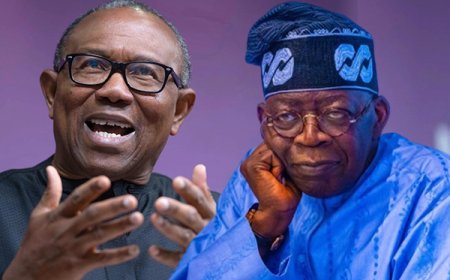
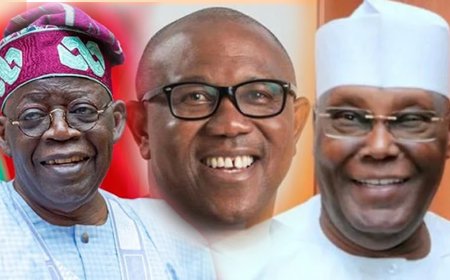
Here lies the painful paradox of our politics: honest men are at their weakest when corrupt actors control the machinery of state power. In a healthy democracy, integrity is a structural asset, competence matters, and a clean record inspires trust. But when political power is captured by individuals who treat public office as an instrument for self-enrichment, protection, and patronage, the rules of engagement are violently inverted. An honest contender like Peter Obi enters the arena believing that truth, competence, and a track record of public service should suffice. The political criminal enters with a vastly different arsenal: unlimited funds, patron-client networks, compromised institutions, and a ruthless commitment to win at all costs, operating on the Machiavellian premise that everything in politics is fair game. This dynamic exposes the handicap of innocence in a corrupted system: On Loyalty: The honest candidate refuses to buy loyalty because he seeks power to serve; the corrupt politician purchases loyalty, expecting a return on investment. On the Rules: The honest candidate insists on adherence to the rules; the corrupt candidate manipulates them. On Institutions: The honest leader respects institutional boundaries; the political criminal captures them. On Public Wealth: The honest leader views state resources as belonging to the citizens; the corrupt politician treats them as campaign capital. When these unequal forces collide, integrity appears dangerously like weakness. Yet citizens must realise that the core problem is not that honest leaders cannot win; it is that honesty alone cannot defeat an organised system of corruption. An honest candidate requires an organised citizenry behind him—voters who recognise that the temporary handouts offered by corrupt politicians are bought with the permanent impoverishment of their country. He needs a youth population that refuses to trade its future for temporary patronage. He needs professionals, religious leaders, traditional institutions, civil society, and a free press willing to defend the truth when it is inconvenient. Above all, he needs institutions that cannot be bought.
Where institutions are weak, criminal actors convert state authority into political dominance, political dominance into financial leverage, leverage into patronage, and patronage back into political power. In this vicious cycle, those who should be investigated become untouchable, those who should be held accountable become powerful, and those who question the system are labelled troublemakers. This is how corruption normalises itself—and how decent people are ultimately driven out of public service. The greatest victory of political corruption is not merely draining the treasury, but frightening good people away from governance entirely. Nigeria must reject this fatalism. We cannot accept the cynical premise that politics is inherently dirty and that compromise is a necessity. That narrative serves only the corrupt, transforming a crime into a fake political rule. When bad actors seize governance, honesty ceases to be a civic virtue and becomes a dangerous liability. The unbribable officer is sidelined; the uncorrupt auditor is silenced. In such an environment, keeping one's hands clean demands extraordinary self-sacrifice. As a result, honesty shrinks, retreating from the public square into private conversations among trusted friends. However, as noted earlier, this retreat is not a permanent extinction—it is a temporary withdrawal. The solution is not for honest citizens to adopt the tactics of their opponents, but to become better organised, more courageous, and politically strategic. The upcoming 2027 election poses a fundamental question for Nigerians: What kind of leadership do we deserve? If we continue to reward vote-buying, intimidation, and institutional manipulation, we cannot be surprised when governance decays. But if we reward accountability, competence, and service, political behaviour will shift.
An honest candidate may start with fewer godfathers and less money to distribute, but he possesses an asset the corrupt politician can never manufacture: credibility. Combined with an awakened citizenry, credibility becomes a formidable political force. The task before Nigerians is not merely to find an honest candidate, but to build the political conditions under which an honest candidate can actually win. When criminals capture power, honest men are handicapped not because integrity is weak, but because corruption has weaponised the system against them. The solution is not to abandon honesty. It is to take back the system. We must create an environment that is not comfortable for the corrupt, and the best way to do it is to increase public awareness of them. Like Edmund Burke said, "The only thing necessary for the triumph of evil is for good men to do nothing." God help us.
What's Your Reaction?
 Like
0
Like
0
 Dislike
0
Dislike
0
 Love
0
Love
0
 Funny
0
Funny
0
 Angry
0
Angry
0
 Sad
0
Sad
0
 Wow
0
Wow
0