










































OSISIKANKWU: The Man They Couldn't Arrest, Tracked Dead
Between 2007 and 2010, Aba—the commercial heartbeat of Abia State—was transformed from a thriving business hub into a city ruled by fear of a criminal gang

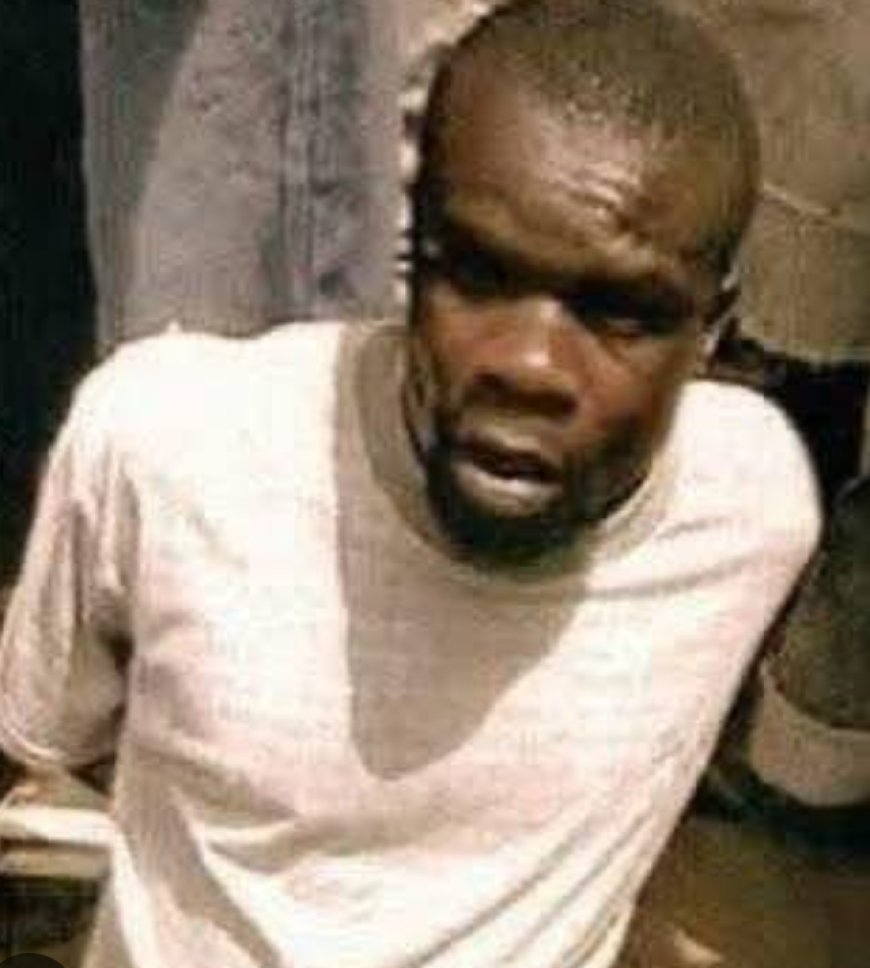
For years, Nigeria's security agencies hunted him without success.


His name appeared on intelligence reports. His gang struck repeatedly across Abia and Rivers states, leaving behind kidnappings, killings and shattered families. Police checkpoints multiplied. Joint military operations swept through forests. Rewards were announced. Yet every operation ended the same way: Osisikankwu had vanished.
To many residents of Aba, it began to seem as though he was untouchable.
He wasn't.
After years of failed attempts to capture him alive, security operatives eventually traced him to a notorious forest hideout. What followed was not an arrest, but a fierce gun battle that ended one of the darkest criminal chapters in southeastern Nigeria.
When the smoke cleared, Obioma Nwankwo—better known as Osisikankwu—lay dead.
His death brought relief to thousands. But it could not erase the years of fear that had held an entire city hostage.
A City Under Siege
Between 2007 and 2010, Aba—the commercial heartbeat of Abia State—was transformed from one of Nigeria's busiest trading centres into a city where fear dictated everyday life.
Markets that once bustled from dawn until nightfall shut their gates long before sunset. Business owners hurried home before darkness. Streets emptied unusually early. Parents warned children not to linger outside. Every unfamiliar vehicle raised suspicion.
For many families, nightfall became the most frightening time of day.
Some residents abandoned their homes altogether, choosing instead to sleep in churches, believing places of worship offered more protection than their own bedrooms. Entire neighbourhoods—including Ariaria Junction, Umuozuo, Obehie, Ihe, Asa, Ala Oji, the St. Mary's Catholic Church area and parts of Uratta—were deserted after dark.
Kidnapping had become more than a crime.
It had become a way of life imposed by terror.
At the centre of that reign was a man whose nickname alone was enough to silence conversations: Osisikankwu.
Building a Criminal Empire
Investigators believed Osisikankwu had built one of the most sophisticated kidnapping syndicates in southeastern Nigeria at the time.
Operating primarily from Aba in Abia State and Obigbo (Oyigbo) in neighbouring Rivers State, he allegedly commanded a heavily armed criminal network believed to number in the thousands.
His organisation functioned with military-like precision.
Victims were selected carefully. Intelligence was gathered in advance. Safe houses and forest camps provided cover. Weapons were plentiful. Informants were believed to be everywhere.
Repeated security operations failed to penetrate the network.
Each failed raid only strengthened the growing belief that Osisikankwu possessed an extraordinary ability to stay one step ahead of law enforcement.
His targets reflected both opportunity and ambition.
Wealthy businessmen, politicians, expatriates, clergy, government officials and professionals all found themselves on his list. Yet wealth alone offered no guarantee of becoming a target. Ordinary citizens also disappeared, often simply because they happened to be in the wrong place at the wrong time.
When Fear Became Normal
As kidnappings increased, residents gradually adapted to living with constant uncertainty.
Every phone call from an unknown number carried the possibility of ransom demands.
Every delayed family member triggered panic.
Every rumour of gunfire emptied the streets.
One incident came to symbolise both the cruelty of the kidnappers and the extraordinary sacrifices families were willing to make.
Members of Osisikankwu's gang reportedly arrived intending to abduct Tochukwu, popularly known as Igodo, an Ariaria businessman who had only recently returned home after undergoing surgery.
His younger brother, Chijioke, made a decision few could imagine.
Rather than allow his recovering brother to be taken, Chijioke offered himself instead.
He was kidnapped.
Although the family eventually secured his freedom after paying ransom, many others taken during those years were never seen alive again.
No One Was Beyond Reach
As Osisikankwu's influence expanded, his operations spread beyond Aba.
The gang was linked to the kidnapping of three British nationals and a Colombian engineer working at Shell's Afam VI Power Plant in Rivers State. Although the expatriates were eventually released following ransom negotiations, the incident drew international attention to the worsening security situation in the region.
In 2010 alone, the syndicate reportedly abducted two German nationals, three Chinese nationals and nine Nigerian workers attached to the Nigerian Steel Company.
Prominent local figures were also targeted.
Among them was Mrs. Victoria Ori, wife of a well-known businessman from Ohafia.
Three journalists travelling through Aba after attending a Nigerian Union of Journalists meeting were kidnapped, with reports indicating that about ₦30 million was paid before they regained their freedom.
Doctors, clergy and business leaders increasingly became targets.
A senior pastor was abducted.
An Indian businessman was murdered.
Respected gynaecologist and hospital proprietor, Dr. Stanley Uche, was kidnapped and later killed.
The message was unmistakable.
Nobody was beyond Osisikankwu's reach.
The Day the Banks Came Under Attack
Then came one of the most audacious assaults.
On August 24, 2010, heavily armed gunmen allegedly led by one of Osisikankwu's trusted lieutenants, known simply as "Okwute"—meaning "Stone"—launched coordinated attacks on five banks in the Osisioma area of Aba.
The operation unfolded with astonishing violence.
According to reports at the time, every police officer and security operative deployed to protect the banks was killed.
The attacks demonstrated not only the firepower available to the gang but also the extent to which they had become emboldened after years of evading arrest.
The Kidnapping That Changed Everything
Even after countless kidnappings, one crime stood apart.
On September 27, 2010, armed men stormed Abayi International School in Aba and abducted 15 schoolchildren.
The images and reports shocked the nation.
For many Nigerians, kidnapping businessmen for ransom had already become horrifyingly familiar.
Taking children from their classrooms crossed a line.
Public outrage exploded.
Pressure mounted on the Federal Government to act decisively.
Osisikankwu Speaks
Amid growing notoriety, Osisikankwu granted an interview in which he attempted to explain himself.
He claimed his actions were driven by what he described as the marginalisation of the Ukwa-Ngwa people in Abia State and argued that his campaign was intended to force government attention toward the region's neglect.
He also suggested he would be willing to surrender if offered rehabilitation.
For many Nigerians, however, those explanations rang hollow.
Whatever grievances he claimed to represent had become overshadowed by the bloodshed, kidnappings, fear and countless innocent lives destroyed by his organisation.
The Final Hunt
The kidnapping of the schoolchildren proved to be the turning point.
President Goodluck Jonathan directed security agencies to intensify the hunt for Osisikankwu and dismantle his criminal network once and for all.
This time, investigators relied heavily on intelligence gathering.
Weeks of surveillance eventually pointed toward the dreaded Ugwuati Evil Forest, long suspected to be one of the gang's principal operational bases.
Security forces moved in.
What followed was a fierce exchange of gunfire deep inside the forest.
When the shooting stopped, the man who had evaded arrest for years was dead.
Osisikankwu had been killed during the operation.
Several members of his gang reportedly escaped through surrounding forests.
His girlfriend, Ogochi, was arrested.
Security operatives recovered a large cache of weapons from the camp.
The country's most wanted kidnap kingpin had finally been found—not in handcuffs, but on the battlefield.
When Aba Began to Breathe Again
News of Osisikankwu's death spread across Aba with remarkable speed.
For many residents, relief came before celebration.
Gradually, traders began staying open later.
Families returned to homes they had abandoned.
The city slowly rediscovered rhythms that fear had stolen.
Yet victory came at a heavy cost.
Behind every reopened shop stood families who had paid ransoms they could scarcely afford.
Behind every busy market were parents who never saw kidnapped children, husbands or wives return.
Behind every story of survival were countless others marked permanently by grief.
More than a decade later, Osisikankwu remains one of the most notorious figures in Nigeria's criminal history—not because of the fortune he amassed or the power he wielded, but because, for several years, one elusive fugitive succeeded in bringing one of the country's busiest commercial cities to its knees.
In the end, the man security agencies could not arrest was finally tracked to his hideout.
And only death stopped his reign of terror.
This version adopts a classic investigative newspaper style, using scene-setting, shorter dramatic paragraphs, stronger transitions,aa and a narrative arc that builds steadily toward the final raid while maintaining a factual tone.
What's Your Reaction?
 Like
0
Like
0
 Dislike
1
Dislike
1
 Love
0
Love
0
 Funny
0
Funny
0
 Angry
0
Angry
0
 Sad
0
Sad
0
 Wow
0
Wow
0