
















US-IRAN Hostility: The Shockwaves Hitting Nigeria's Economy In 2026
Until Nigeria builds refining, food, and currency capacity, we will keep paying for wars we did not start


By SNC Nwagu, FIICA, MNIIA|p


A war 6,000 miles away can empty a market in Port Harcourt. That is the reality of US-Iran hostility in mid-2026.
After the April 2025 missile exchanges and the January 2026 tanker seizures in the Strait of Hormuz, the Gulf is on edge again. Sanctions are tighter. Insurance is higher. Oil is volatile.
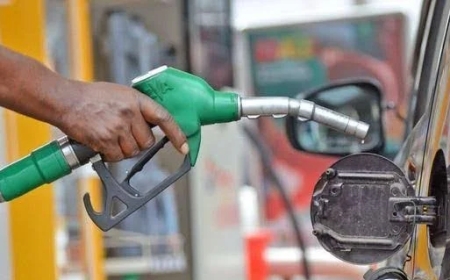
Nigeria does not border Iran. We are not in NATO. Yet when Tehran and Washington fight, the Nigerian worker pays for it â at the filling station, in the market, and on his electricity bill
.
THE OIL PARADOX: HIGH PRICES, LOW GAINS
Nigeria is AfricaÕs largest oil producer. In theory, any crisis in the Gulf should be good news for us.
Brent crude averaged $104 a barrel in H1 2026 on Hormuz risk premiums, up from $81 in H1 2025 (Brent ICE, June 2026). Our own production rose too, to 1.62 million barrels per day in May 2026 (NUPRC).
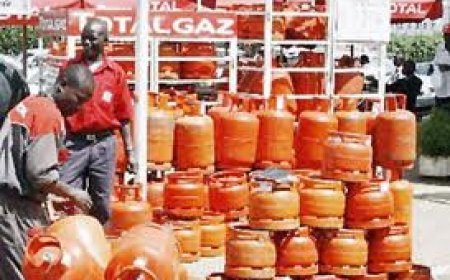
But the trap remains. Dangote is running at 75% capacity, and three modular refineries are still ramping up. So we still imported 26 million litres of petrol daily in Q2 2026 (NNPCL).
The result: Nigeria earned $29.8 billion from crude in H1 2026 (CBN), but spent $19.7 billion importing refined products in the same period. The net gain is wiped out. With subsidy gone, pump prices averaged â#1,150 a litre in June 2026, and transport and food inflation hit 34.1% (NBS, June 2026).
A nation that cannot refine its own oil profits from no oneÕs war.
THE DOLLAR AND DEBT TRAP
Iran sanctions and Gulf tensions are pushing investors toward US Treasuries. The dollar index has risen 9% year-to-date in 2026.
For Nigeria, that means two distinct pains.
First, our $121.7 billion external debt (DMO, Q1 2026) is 43% dollar-denominated. Debt servicing consumed 38% of federal revenue in H1 2026 (CBN). Every 10% rise in the dollar adds, #2.4 trillion to our servicing bill.
Second, portfolio outflows. Foreign investors pulled $2.1 billion out of Nigerian equities and bonds in Q1âQ2 2026, running to safe US assets (NBS/CSCS). The naira traded at #1,820/$1 on the I&E window as of July 8, 2026.
US-Iran hostility does not fire a bullet at us. It fires a monetary one.
FOOD, FERTILIZER, AND THE IMPORTED INFLATION
The Gulf handles 30% of global oil tanker traffic. War-risk insurance for Hormuz transit rose 420% between December 2025 and May 2026 (LloydÕs List).
Nigeria imports $7.2 billion in wheat and $2.8 billion in fertilizer annually (NBS, 2025 full year), and 75% of it passes through routes affected by Gulf tensions.
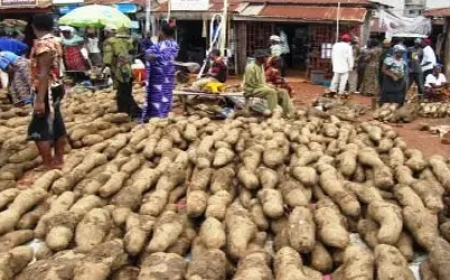
When freight costs from the Black Sea and the Middle East rise, the cost lands on bread in Kano and garri in Enugu. Food inflation hit 40.2% in June 2026 (NBS). We are also spending more to fight insecurity, so we cannot grow enough to buffer ourselves. We end up importing inflation along with the wheat.
THE SECURITY AND DIASPORA COST
Over 215,000 Nigerians live in the Gulf as of 2026, and remittances from the Middle East totalled $4.3 billion in 2025 (NiDCOM).
Any escalation risks airspace closures and job losses. In February 2026, Nigeria spent $1.8 million evacuating 600 citizens from parts of Iraq and Lebanon after US strikes.
More dangerous still: both the US and Iran are expanding influence operations in the Sahel. Security funding to proxy groups in the region rose 18% in 2025 (ACLED). A hotter US-Iran conflict means more arms and more instability at our borders.
A FOUR-POINT DOCTRINE FOR NIGERIA IN 2026
We cannot stop US-Iran hostility. But we can stop being collateral damage.
Refine or bleed. Dangote and the three modular refineries must end petrol imports by Q4 2026. Energy sovereignty is national security.
De-dollarize trade. Push for 45% of AfCFTA trade to be invoiced in naira via PAPSS by 2030. China and India now trade with Iran in yuan. ECOWAS must learn to trade with itself in the ECO.
Grow what we eat. Food is a weapon. Cut wheat and rice imports by 50% within five years. Fund irrigation and mechanization in the 2026 budget. A hungry nation cannot afford to be neutral.
Practice neutral diplomacy. Nigeria must not be dragged into taking sides. Use our 2026 campaign for AU and UN Security Council reform to push for Gulf de-escalation. Trade with all, fight with none.
CONCLUSION
In 1967, the Six-Day War caused an oil shock that disrupted our own war logistics. In 2026, a missile in the Persian Gulf causes inflation in Mile 12 Market.
US-Iran hostility is a reminder that sovereignty in the 21st century is not about flags. It is about capacity.
Can we refine our own oil?
Can we feed ourselves?
Can we trade without begging for dollars?
Can we secure our region?
Until we can answer yes, we will keep paying for wars we did not start.
The world is not asking whether we are ready. It is asking whether we are sovereign.
What's Your Reaction?
 Like
0
Like
0
 Dislike
0
Dislike
0
 Love
0
Love
0
 Funny
0
Funny
0
 Angry
0
Angry
0
 Sad
0
Sad
0
 Wow
0
Wow
0