























Visa Ban For 712: A Consequential Pre-Election Defence Of Democracy
The petition called for visa bans against 13 state governors, three cabinet ministers, and a Federal High Court judge, as well as the placement of 239 INEC officials and 482 judicial officers on an international watchlist

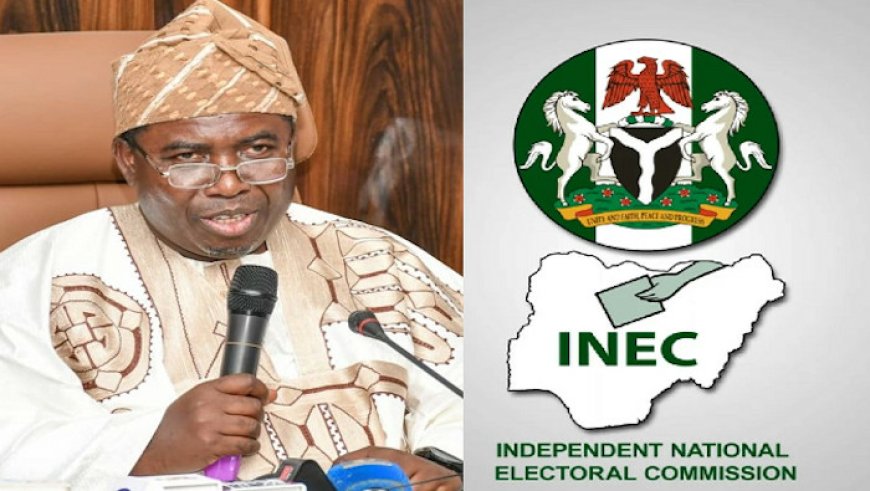
Although many may seek to minimise its implications once financial interests come into play, the recommendation that 721 INEC and judicial officials, along with antidemocratic ministers, and Governors be placed on international watchlists represents the most significant and commendable pre-election intervention. In November 2026, the International Society for Civil Liberties and Rule of Law (Intersociety) submitted a petition to 50 international authorities and foreign missions. The petition called for visa bans against 13 state governors, three cabinet ministers, and a Federal High Court judge, as well as the placement of 239 INEC officials and 482 judicial officers on an international watchlist.


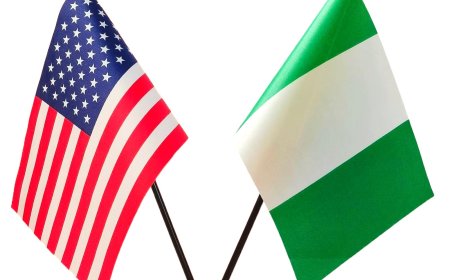
With Nigeria’s presidential election set for January 16, 2027, less than two months away, the initiative could have substantial implications for the credibility of the electoral process in several respects. In Nigerian politics, domestic accountability institutions, including anticorruption agencies and code of conduct tribunals, are frequently viewed as slow-moving or vulnerable to executive influence. However, Nigerian political elites depend substantially on Western countries—especially the US, UK, Canada, and EU nations—for medical care abroad, family residences, property holdings, and their children’s education. By naming specific individuals, including FCT Minister Nyesom Wike and governors in strategically important battleground and regional states such as Lagos, Kano, Rivers, Kaduna, and Anambra, the petition puts their international mobility and established lifestyles at risk. Visa restrictions previously imposed by the U.S. State Department following the 2019 and 2023 elections demonstrated that Western missions are prepared to deploy this instrument, thereby creating a credible psychological deterrent to blatant electoral manipulation or state-sponsored violence. Credible elections require a level playing field well before election day. Intersociety’s petition draws attention to familiar forms of pre-election incumbent abuse. Financial inducements, including allegations that FCT councillors were promised ₦10 million to deliver their wards, further obscure the boundary between public administration and partisan patronage. Restrictions on civic space, excessive taxation, the destruction of opposition billboards, the denial of public venues for rallies, and attacks on opposition convoys limit voters’ access to alternative political choices. Bringing these pre-election tactics to international diplomatic attention can pressure state executives to restrain local enforcers and security agencies, thereby preserving the space required for genuine multiparty competition. The petition’s call for advance scrutiny of INEC and the judiciary is particularly significant, especially its demand that 239 senior INEC officials, including directors responsible for ICT, procurement, and operations, and 482 senior judicial officers be placed on an international watchlist. In light of the technical controversies surrounding BVAS and result transmission in 2023, placing INEC’s operational and ICT leadership under notice signals that administrative or technological “glitches” will be examined as possible deliberate sabotage rather than dismissed as mere incompetence. The judiciary also warrants attention, beginning with rulings that favour electoral fairness—such as the cited November 5, 2026, judgment nullifying the African Democratic Congress (ADC)’s leadership and primaries and preventing NDC senatorial candidate Senator Oma Agege from removing opposition candidates from the ballot before a single vote is cast. Furthermore, because Nigerian presidential elections are frequently determined or affirmed by election tribunals, notifying Supreme Court and Court of Appeal justices seeks to protect the judiciary from political capture. Conditioning foreign aid and diplomatic recognition is another significant aspect of the petition, which calls on Western governments to make future development and humanitarian assistance contingent on Nigeria's compliance with democratic standards. Although Western countries seldom suspend humanitarian aid altogether because of geopolitical and security considerations in West Africa, public warnings or diplomatic downgrades from major partners such as the US, UK, and EU would still carry substantial reputational consequences. An incoming administration without international democratic legitimacy would immediately encounter difficulties in attracting foreign direct investment and negotiating bilateral agreements. However, the petition faces two potential risks and limitations. Although it increases pressure for a credible election, its effect will likely be constrained by two realities: government resentment driven by sovereignty concerns and the pursuit of alternative partnerships with less democratic countries, including China, India, Russia, and Egypt, as well as Asian countries for medical tourism.
However, the petition’s immediate consequence is not necessarily the rapid revocation of visas. Rather, it establishes an international evidentiary foundation that enables foreign observers to know precisely where to focus their attention on January 16, 2027.
Ultimately, as the 2027 electoral calendar narrows and campaigns are already in progress, the petition redirects international scrutiny from post-election response toward pre-election prevention. By increasing the personal and diplomatic costs of manipulating state institutions, the judiciary, or electoral procedures, it provides an external safeguard for the integrity of the January 16 vote. This is a significant step toward preserving our democracy.
_Ike Abonyi Editor@Large_
What's Your Reaction?
 Like
0
 Dislike
0
 Love
0
 Funny
0
 Angry
0
 Sad
0
 Wow
0