














More Reasons Why APC Progressive Governors Are Against Nyesom Wike — Onoh
Onoh Narrates Controversial Trajectory of Wike’s Political Instrumentalisation

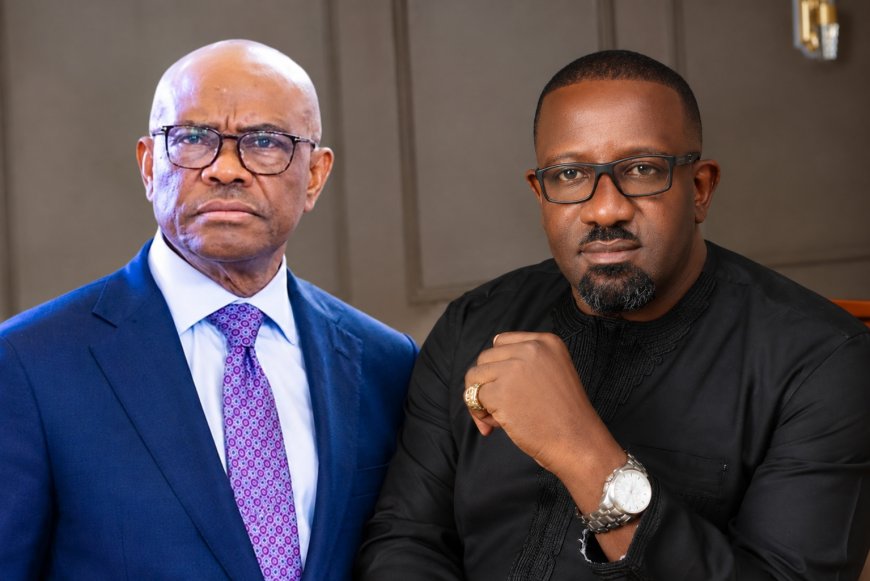
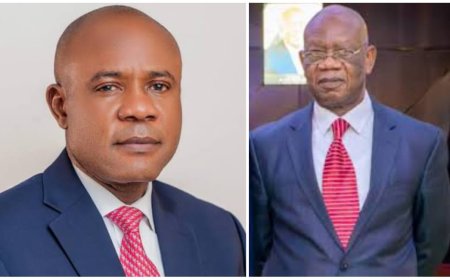
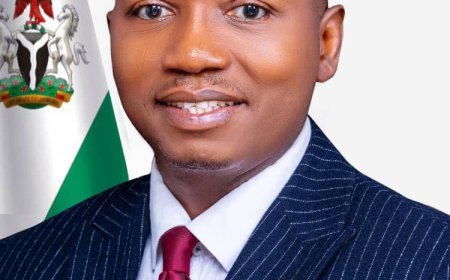
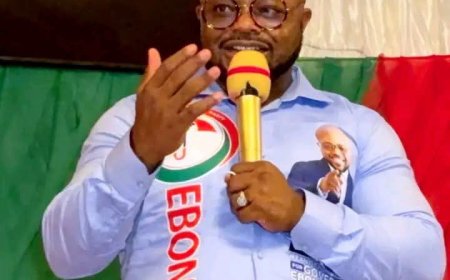
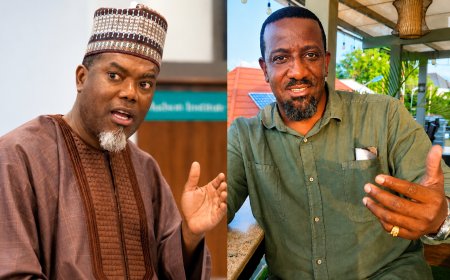
The former South-East spokesman to President Bola Ahmed Tinubu, Denge Dr Josef Onoh, has given more reasons he believes the Progressive Governors Forum is confronting the Minister of the Federal Capital Territory, Nyesom Wike, citing what he described as the minister’s continued attacks on APC governors and his controversial political trajectory.


Onoh, in a statement, traced Wike’s political journey from his days as chairman of Obio-Akpor Local Government Area of Rivers State to his current position as FCT minister, arguing that his career has been characterised by fierce political controversies and a recurring role as an instrument for higher political interests.
“Rather than a trajectory of independent statesmanship, it is a legacy defined by bitter political controversies and a recurring role as a political wrecking ball used by higher authorities to decimate political opponents,” Onoh said.
He recalled that Wike served as Executive Chairman of Obio-Akpor LGA between 1999 and 2007, where, according to him, his administration was marked by fierce local rivalries and dominance tactics.
Onoh said Wike’s aggressive political style subsequently attracted the attention of higher political actors, leading to his appointment as Chief of Staff to then Rivers State Governor, Rotimi Amaechi.
He alleged that, in that role, Wike was used to consolidate political power, manage local political machinery and neutralise internal dissent within the Peoples Democratic Party (PDP) in Rivers State.
Onoh further described Wike as “the wrecking ball of the Jonathan Presidency,” alleging that his political utility later expanded nationally when he was appointed Minister of State for Education and subsequently acting Minister under former President Goodluck Jonathan.
According to Onoh, Wike was deployed by the presidency in the political battle against Amaechi after the Rivers governor fell out with the Jonathan administration.
He alleged that Wike effectively weaponised federal influence, divided the Rivers State House of Assembly and led a political assault against Amaechi’s structure ahead of the 2015 elections.
“He was the spearhead used by the presidency to punish political non-alignment and shatter Amaechi’s structure ahead of the 2015 elections,” Onoh said.
Limits of Wike’s Political Machinery
Onoh also argued that the 2022 PDP presidential primary exposed what he described as the structural limitations of Wike’s political machinery.
He said that despite Wike’s considerable influence within the PDP at the time, his political machinery fell short at the Eagle Square primary against the alliances assembled by his opponents.
“That outcome proved that a highly centralised, state-dependent political structure does not automatically translate into national consensus,” he said.
Onoh therefore argued that Wike’s influence remains largely regional and should not automatically be regarded as a guaranteed nationwide electoral asset ahead of 2027.
The G-5 Rebellion
On the 2023 presidential election, Onoh said Wike’s role in the G-5 Governors’ rebellion further demonstrated his willingness to disrupt his own political party when his personal ambitions were frustrated.
He recalled that Wike had actively contested the 2023 PDP presidential primary before losing to Atiku Abubakar, a Northern candidate.
Following the loss, Wike was widely reported to have been under consideration as Atiku’s running mate.
Onoh argued that if Wike’s advocacy for power rotation to the South had been an absolute and foundational principle, consideration of a joint ticket with a Northern presidential candidate would have been rejected from the outset.
Instead, he said, after Wike was passed over for the vice-presidential slot, he formed the G-5 Governors, also known as the Integrity Group, which openly opposed the PDP presidential candidate and undermined Atiku’s campaign in Rivers State.
Onoh claimed that the Tinubu presidential campaign utilised Wike’s grievances to fracture the PDP’s traditional voting strength in the South-South.
He added that he was among those within the former PDP camp of the Tinubu campaign who suggested bringing Wike into the campaign, saying subsequent developments vindicated that position.
According to Onoh, the G-5 rebellion was primarily a tactical product of internal party disagreements rather than an uncompromising ideological commitment to regional equity.
South-East Criticism
Onoh also faulted Wike’s criticism of South-East governors over their inability to deliver the region outright for President Tinubu in the 2023 presidential election.
He argued that the South-East was responding to what he described as a historic indigenous electoral movement led by Peter Obi.
According to him, if Obi had been an indigene of Rivers State and generated the same regional momentum, no political structure in the South-South could have halted a total electoral sweep.
Onoh said delivering a state against a distant external candidate was structurally different from attempting to halt a home-grown regional movement, arguing that Wike’s comparison failed to account for the dynamics of the 2023 election.
Abuja Demolitions and Political Friction
Onoh also criticised Wike’s handling of the Federal Capital Territory, particularly his aggressive demolition threats against properties belonging to prominent Nigerians.
He argued that the political and administrative environment of Abuja is fundamentally different from that of Rivers State.
“Abuja is the diplomatic nerve centre of the Federal Republic of Nigeria,” Onoh said, noting that the nation’s capital hosts international embassies, foreign missions and global media organisations.
He warned that high-handed political methods deployed in state politics could not simply be transferred to the nation’s capital, where administrative actions are subject to heightened national and international scrutiny.
According to him, political friction, heavy-handed administrative actions or disruption of civic rights in the FCT during election cycles could attract international attention and potentially affect perceptions of Nigeria’s democratic process and foreign relations.
Why the APC Governors Are Confronting Wike
Onoh said the current face-off between Wike and several APC governors should be understood against the backdrop of his political history and his continued links to the PDP structure.
He noted that Wike’s PDP fielded 405 National Assembly candidates across the 109 Senate and 360 House of Representatives seats, as well as 23 governorship candidates in states holding gubernatorial elections.
Onoh argued that Wike’s history as an aggressive political operator explains his current friction with several APC governors and the wider APC structure.
He said Wike’s political survival had historically depended on maintaining a “theatre of war,” adding that his position within an APC-led federal administration, while still attempting to retain remnants of the PDP structure in Rivers State, had placed him in a political “friction zone.”
Onoh further alleged that political forces within the national framework continue to tolerate and utilise Wike to destabilise opposition strongholds and manage geopolitical interests.
He said the Progressive Governors recognise Wike’s political trajectory and understand that an actor whose career has involved the destruction of political structures could eventually turn that energy inward against the APC.
Onoh also described Wike’s self-styled “Rainbow Coalition” as a personal platform for negotiating a possible vice-presidential position for himself in 2031.
Wike, Fubara and the APC
Recalling Wike’s political confrontation with his successor, Governor Siminalayi Fubara, Onoh said the minister’s reported threats to “put fire” in states of APC and PDP governors who oppose him were a continuation of what he described as his established political methodology.
He alleged that Wike was attempting to use federal leverage against domestic political rivals, even where such actions could compromise political stability.
Onoh said there is an impression among some Nigerians that the APC presidency uses Wike as a tactical institutional wedge to keep the opposition divided ahead of the next election cycle, while also relying on him to enforce controversial federal land reforms in Abuja.
Warning to Tinubu
Onoh, however, warned President Bola Ahmed Tinubu to carefully assess the long-term implications of Wike’s “Rainbow Coalition.”
He argued that a parallel political arrangement that professes loyalty to the President while supporting candidates against the ruling party at the state level could create structural fragmentation within the APC and confuse the grassroots electorate.
According to Onoh, the presidency is approaching a decisive crossroads, as no administration can successfully govern or secure a national mandate by alienating the formal party executives and governors who control the legal and political machinery of the ruling party.
“If these boundary issues are not firmly resolved, the presidency will inevitably face a choice between maintaining the institutional loyalty of over 30 APC governors or accommodating the highly volatile, independent actions of one single PDP minister,” he said.
In conclusion, Onoh described Wike’s political history as evidence of what he called an “unstable alliance” with political benefactors.
He warned that Wike should not be allowed to sacrifice the institutional foundation of the APC for his personal political survival.
According to Onoh, Wike’s history demonstrates “tactical disruption” carried out within frameworks where his aggressive political energy serves the interests of higher political actors.
“As he confronts our progressive governors across party lines today, we must look past the immediate noise and recognise a deeper truth: Wike remains a political instrument whose ultimate utility is conflict, and whose historical legacy is the systematic demolition of the very political houses that shelter him,” Onoh said.
What's Your Reaction?
 Like
0
Like
0
 Dislike
0
Dislike
0
 Love
0
Love
0
 Funny
0
Funny
0
 Angry
0
Angry
0
 Sad
0
Sad
0
 Wow
0
Wow
0