





























Rights Groups Allege Army Excesses, Civilian House Burnings in Ezeagu, Demand Probe
Intersociety and CLO, rights groups have presented joint report of investigation into recent conflict between a community in Ezeagu local government area of Enugu State and the Nigerian army leading to burning of houses among other things.


Our Reporter


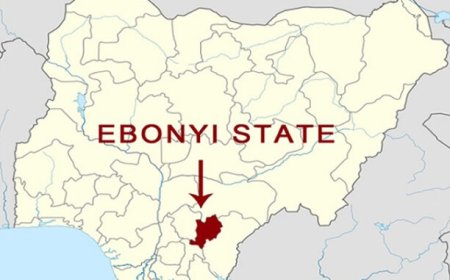
A coalition of civil rights organisations, the International Society for Civil Liberties and Rule of Law (Intersociety) and the Civil Liberties Organization (CLO) Southeast, has released a detailed investigative report alleging that personnel of the Nigerian Army's 82 Division carried out widespread abuses during military operations in Ezeagu Local Government Area of Enugu State earlier this month.
The report, released on Tuesday in Enugu, alleged that the military operation in Imezi-Owa communities followed what the organisations described as the instigation of armed Fulani herdsmen operating in the area.
The rights groups claimed the operation led to the burning of residential houses, arrests of civilians, displacement of residents and other alleged human rights violations.
According to the report, a six-member investigative team dispatched to the area found that no fewer than ten civilian houses located in residential areas of Akwuke-Umudim, Abonuzu, Eziama and Eziowa villages in Imezi-Owa were razed during the operation conducted between May 5 and May 6, 2026.
The organisations further alleged that several residents were arrested during the operation, including a teenage girl identified as Chisom Okafor, aged between 15 and 17 years, whom they claimed was later labelled an informant of the proscribed separatist group, the Eastern Security Network.
Three other young men — Ndubuisi Chikelu, Thank God Chikelu and Chidi Nosike — were also reported missing following the operation.
According to the report, the military action forced hundreds of young residents to flee their homes over fears of arrest, detention or possible reprisals.
Providing details of events leading to the operation, the rights groups alleged that local vigilantes were initially invited to a meeting by forest guards but were later disarmed and accused of collaborating with ESN members.
They claimed the vigilantes were subsequently compelled to lead soldiers into forests around the Ajali River Valley where armed actors were believed to be operating.
The report stated that clashes allegedly erupted between soldiers and armed groups around the Ajali River Forest Valley, located several kilometres from residential communities.
It added that after three military personnel were reportedly injured during exchanges of gunfire, troops allegedly returned and redirected operations toward nearby villages rather than returning to the forest battleground.
The groups accused soldiers of deploying heavy weapons in residential areas, resulting in destruction of homes and properties.
Some residents also alleged cases of looting involving motorcycles, electronics and domestic animals.
The organisations further linked the tensions in Ezeagu to longstanding conflicts between communities and Fulani herdsmen operating within forests and farmlands around the Ajali River Valley.
Citing findings from an earlier report published in December 2025, Intersociety claimed more than 20 camps allegedly linked to armed Fulani herdsmen existed across forests in Ezeagu communities.
The rights groups accused these groups of involvement in years of attacks, farmland destruction, kidnappings and violent crimes within the area.
The report also alleged that military deployment to Imezi-Owa since late 2025 followed complaints and security concerns linked to local armed resistance against attacks by suspected herdsmen.
The groups further accused the military of attempting to justify the operation through what they described as "false labelling" and "ethno-religious profiling" of residents.
Specifically, they challenged explanations earlier issued by the Nigerian Army's 82 Division, which had reportedly stated that troops encountered armed resistance during an operation targeting suspected criminal hideouts and improvised explosive devices.
According to Intersociety and CLO Southeast, exchanges of gunfire occurred around forest locations and not within residential communities where houses were allegedly burnt.
The rights groups also criticised the demolition of a traditional shrine in the area, alleging that it was wrongly portrayed as a criminal hideout.
Among demands contained in the report, the organisations called on the Enugu State Government to rebuild affected homes, compensate victims and ensure accountability for security personnel found culpable.
They also urged authorities to investigate allegations surrounding Fulani herdsmen activities in Ezeagu and secure the release of persons reportedly detained during the operation.
The report was jointly signed by Southeast CLO Chairman, Aloysius Emeka Attah, and Intersociety Board Chair, Emeka Umeagbalasi, alongside other officials of both organisations.
What's Your Reaction?
 Like
0
Like
0
 Dislike
0
Dislike
0
 Love
0
Love
0
 Funny
0
Funny
0
 Angry
0
Angry
0
 Sad
0
Sad
0
 Wow
0
Wow
0