






















Wike’s Rainbow Coalition A Ploy To Gain Legislative Leverage In 2027 — Onoh
Onoh said although the coalition was being presented as a platform for mobilising support for Tinubu’s 2027 re-election, its political structure and activities, suggested a broader agenda capable of weakening the APC


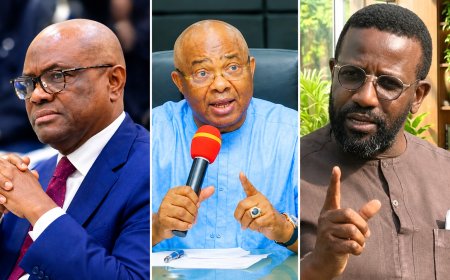
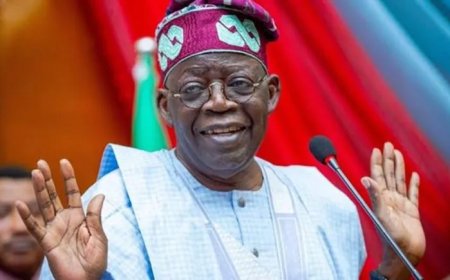
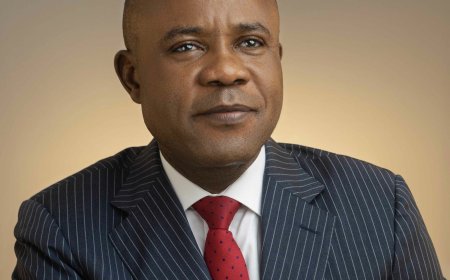
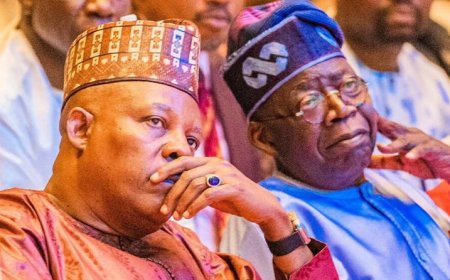
Former South-East spokesman to President Bola Ahmed Tinubu, Denge Josef Onoh, has alleged that the “Rainbow Coalition” associated with the Minister of the Federal Capital Territory (FCT), Nyesom Wike, is a calculated political strategy aimed at gaining legislative and political leverage ahead of the 2027 general elections.


Onoh, in a statement made available to journalists in Abuja, said the political manoeuvring surrounding Wike and the emerging coalition required what he described as an immediate institutional response from President Tinubu and the leadership of the All Progressives Congress (APC).
He said although the coalition was being presented as a platform for mobilising support for Tinubu’s 2027 re-election, its political structure and activities, in his view, suggested a broader agenda capable of weakening the APC.
Onoh described the Rainbow Coalition as a “political mirage” and a parallel power structure, warning that failure by the APC leadership to address it could allow the movement to develop into an independent political machine capable of challenging the ruling party’s structures.
He alleged that the strategy was to field candidates on the platform of the Peoples Democratic Party (PDP) and other allied political platforms for governorship, Senate and House of Representatives seats in 2027.
According to him, such a strategy could enable Wike to build an autonomous political network while simultaneously operating within the political space of an APC-led Federal Government.
“If Wike’s Rainbow Coalition wins significant seats in 2027, the consequences for the APC will be catastrophic,” Onoh said, alleging that a sizeable bloc of lawmakers aligned with the coalition could give the FCT minister considerable influence over legislative decisions.
He argued that such a development could affect the APC’s ability to independently determine the leadership of the National Assembly, pass budgets and secure the confirmation of executive nominees without engaging in extensive political negotiations.
Onoh further alleged that the coalition could weaken the APC’s grassroots structures if candidates backed by the Wike camp succeeded in capturing governorship positions currently held or contested by the ruling party.
He said control of state political structures and resources could, in his assessment, strengthen Wike’s political allies and reduce their dependence on the APC at the federal level.
The former Tinubu spokesman also compared Wike’s alleged political strategy with the political trajectory of President Tinubu between 2010 and 2015.
According to Onoh, Tinubu at the time maintained an independent political structure in the South-West, built legislative influence and subsequently participated in the political realignment that culminated in the formation of the APC and the defeat of the PDP at the federal level.
Onoh said Wike appeared to be pursuing a similar long-term strategy by maintaining political structures outside the APC while using his position as a federal minister to build influence across political parties.
He argued that the ultimate objective of the alleged strategy was not necessarily the 2027 election, but the political realignment expected after the 2027 elections and ahead of 2031.
“Politics is entirely governed by interest and long-term calculation. The endgame for the Wike-led Rainbow Coalition is not 2027; it is the post-Tinubu transition in 2031,” Onoh said.
He further alleged that, if the coalition succeeded in building a strong network of governors, senators and members of the House of Representatives by 2027, Wike could emerge as a major negotiating force in determining the political direction of the country after the Tinubu administration.
Onoh specifically linked this projection to the possibility of a southern vice-presidential slot in 2031, alleging that Wike could seek to position himself or a political ally for such a role by leveraging a broad national political network.
He said Wike’s age by 2031 would also leave him with considerable time to pursue further political ambitions.
Onoh, however, said the Progressive Governors Forum (PGF), under the leadership of Imo State Governor Hope Uzodimma, was justified in resisting what he described as a parallel political arrangement.
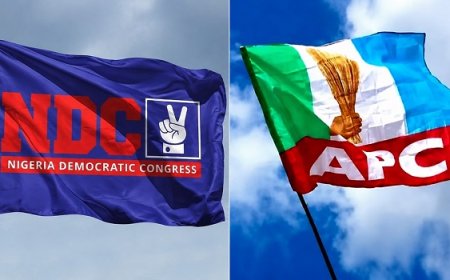
The PGF has said APC governors would not support political arrangements capable of weakening the party or adversely affecting its candidates in the 2027 elections. Wike, on his part, has maintained that his coalition is focused on supporting Tinubu’s re-election and has insisted that he never promised that the PDP would not field candidates in governorship and legislative elections.
Onoh said the APC did not need an external political coalition to secure electoral support for the President, arguing that the party already possessed the organisational structure and political machinery required to prosecute the 2027 election.
He therefore called on President Tinubu and the APC National Working Committee to take what he described as decisive action over Wike’s political activities.
Onoh urged Wike to make a clear political choice: either formally join the APC and integrate his political structures into the ruling party, resign his ministerial position and operate as an opposition politician, or stop operating what he described as a parallel political machine capable of undermining APC candidates.
“The time for diplomatic silence is over,” Onoh said, warning that failure to address the issue could, in his words, amount to giving Wike “the keys to dismantle the APC house tomorrow.”
What's Your Reaction?
 Like
0
 Dislike
0
 Love
0
 Funny
0
 Angry
0
 Sad
0
 Wow
0