









































2027 Election: Supreme Court Ruling Raises Fresh Questions Over NDC Candidates’ Eligibility in Enugu
The Supreme Court judgment itself did not declare any NDC candidate in Enugu State disqualified. The implications for individual candidates, if any, would depend on the relevant party records, membership registers


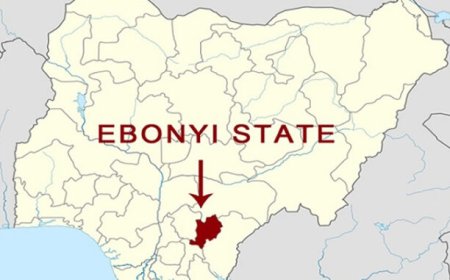
The recent judgment of the Supreme Court on political party membership registers has raised fresh questions over the eligibility of National Democratic Congress (NDC) candidates contesting the 2027 general elections in Enugu State.


The development follows the unanimous judgment of the Supreme Court delivered on Thursday, September 24, 2026, which restored Sections 77(5), 77(6), 77(7) and 84(2) of the Electoral Act 2026.
The judgment followed an appeal by the Independent National Electoral Commission (INEC) against an earlier decision of the Court of Appeal which had voided the disputed provisions.
Under Section 77(5), only members whose names appear on a political party's membership register submitted to INEC at least 21 days before a primary, congress or convention are eligible to participate in the exercise.
Section 77(6) further requires political parties to use the membership register submitted to INEC for such exercises, while Section 77(7) provides that a political party that fails to submit its membership register within the stipulated period shall not be eligible to field a candidate.
Findings available to this newspaper indicate that the circumstances surrounding the emergence of some NDC candidates for National and State Assembly seats in Enugu State may warrant fresh scrutiny in light of the Supreme Court judgment.
The concerns centre on compliance with statutory requirements relating to party membership, the submission of membership registers to INEC, participation in properly conducted party primaries and the role of INEC in the monitoring of such exercises.
The issue therefore potentially affects the entire field of NDC candidates for the National Assembly and State House of Assembly elections in Enugu State, rather than any particular individual.
Where candidates emerged from primary exercises that were not conducted in accordance with the provisions now restored by the Supreme Court, or where questions arise over whether participants were listed in the relevant party membership register submitted to INEC within the prescribed period, their nominations could potentially become subjects of legal scrutiny.
The Supreme Court case arose from a legal battle initiated at the Federal High Court in Abuja by the Zenith Labour Party (ZLP), which challenged the constitutionality of the disputed provisions.
The Federal High Court dismissed the suit on May 5, 2026, prompting the ZLP to appeal to the Court of Appeal. The appellate court subsequently voided the provisions in its July 16 judgment, leading INEC to approach the Supreme Court.
A seven-member panel led by Justice Adamu Jauro upheld INEC's appeal, affirmed the decision of the Federal High Court and awarded N2 million in costs against the Zenith Labour Party.
The judgment effectively restored the statutory provisions governing political party membership registers and candidate nomination.
Section 84(2) of the Electoral Act 2026, also restored by the judgment, provides for the nomination of candidates by political parties through direct primaries or consensus.
The ruling has consequently brought renewed attention to the processes through which political parties conducted their primaries and nominated candidates for the 2027 elections, including the NDC's National and State Assembly candidates in Enugu State.
However, the Supreme Court judgment itself did not declare any NDC candidate in Enugu State disqualified. The implications for individual candidates, if any, would depend on the relevant party records, membership registers submitted to INEC, evidence relating to the conduct of primaries and any legal challenge brought before the appropriate electoral or judicial authorities.
With the disputed provisions now back in force, the compliance of political parties and their candidates with statutory membership and nomination requirements is expected to come under increased scrutiny as preparations for the 2027 general elections intensify.
What's Your Reaction?
 Like
0
 Dislike
0
 Love
0
 Funny
0
 Angry
0
 Sad
0
 Wow
0