

















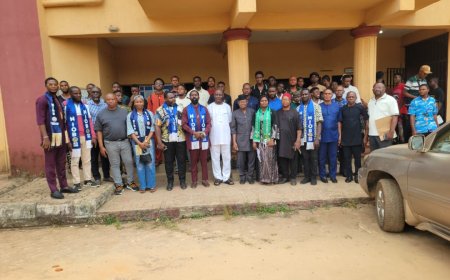






















FUAHSE Int'l Conference Highlights AI, Collaboration as Key Drivers of Sustainable Devt.
Participants identified the major takeaways from the conference as the need to embrace artificial intelligence responsibly, encourage collaboration between arts and science disciplines

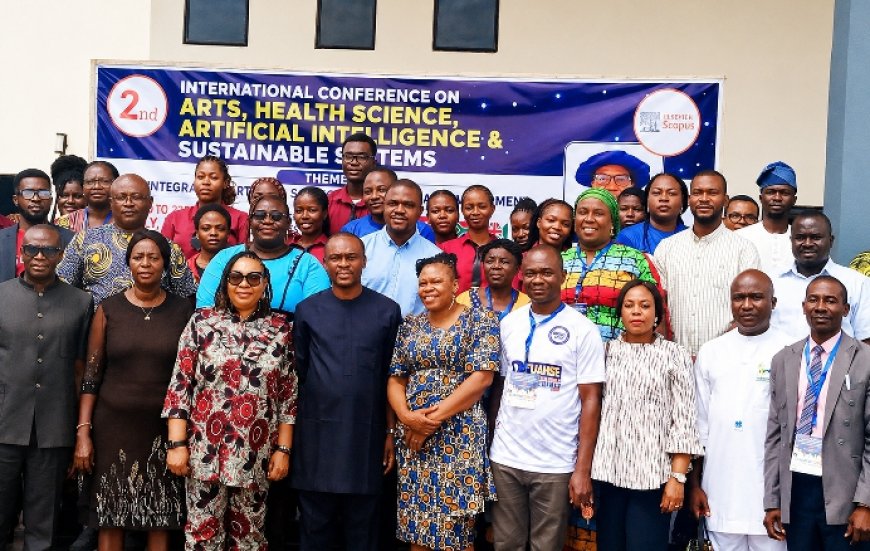
Experts, academics and researchers have underscored the importance of collaboration, innovation and the responsible adoption of artificial intelligence.
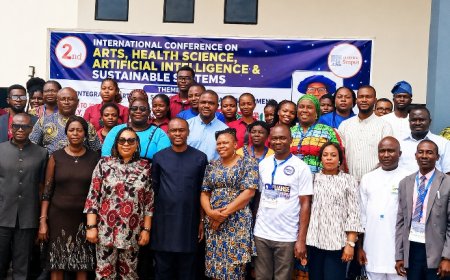
The agreement was reached at the second International Conference on Arts, Health Sciences, Artificial Intelligence and Sustainable Systems (AHIAISE 2026), hosted by the Federal University of Allied Health Sciences, Enugu (FUAHSE).
Participants identified the major takeaways from the conference as the need to embrace artificial intelligence responsibly, encourage collaboration between arts and science disciplines, promote sustainable technological innovation, strengthen international research partnerships and apply scientific knowledge to solve pressing societal challenges.
They renewed commitment by participants to deploy the knowledge acquired in advancing healthcare, education, technology and sustainable development while ensuring that AI remains a tool that complements, rather than replaces, human intelligence.
The Vice-Chancellor of FUAHSE, Prof. John Emaimo, describing the conference as a platform for advancing research, innovation and interdisciplinary collaboration.
Emaimo said the conference brings together scholars, healthcare professionals, engineers, technologists, policymakers, industry leaders and innovators to develop practical solutions to emerging challenges in healthcare, technology and sustainable development.
He noted that FUAHSE, established in 2024, was founded to strengthen Nigeria's healthcare sector through the training of world-class allied health professionals, research excellence and innovation in healthcare delivery.
According to him, the objectives of AHIAISE 2026 align with the university's vision of promoting excellence in education, research and community service, while fostering collaborations that improve healthcare outcomes and drive sustainable development.
General Co-Chair of the conference, Rev. Sr. Dr. Henrietta Uzoeto, said that the universities organised the conferences primarily to promote knowledge sharing, networking and international collaboration that ultimately lead to practical solutions to real-life problems.
She noted that the conference attracted presenters and participants from countries including the United States, the United Kingdom, Taiwan and South Africa, significantly increasing the global visibility of FUAHSE.
According to her, presentations at the conference demonstrated how research could generate innovative solutions, citing discussions on alternative methods of power generation as examples of ideas capable of transforming communities.
She added that beyond the academic presentations, the conference created opportunities for future international partnerships, joint research projects and knowledge exchange among institutions across the world.
Also speaking, the Conference Manager, Dr. Adora Obayi of the University of Nigeria, Nsukka, said the conference was conceived to create a unique platform where experts from both the arts and sciences could collaborate instead of working in isolation.
She explained that the rapid advancement of technology, particularly artificial intelligence, made such interdisciplinary engagement necessary.
According to Obayi, one of the conference's strongest messages was that AI should be viewed as a partner that enhances human productivity rather than a threat to employment.
"Artificial intelligence has come to stay. It is here to assist us in every field, whether in the sciences or the arts. We must learn to harness it responsibly for the betterment of society," she said.
The two-day conference brought together scientists, scholars and professionals from Nigeria and more than seven other countries, with participants attending both physically and virtually to explore how interdisciplinary collaboration can address societal challenges.
The Acting Dean of the Faculty of Healthcare Services, Dr. Livinus Abonyi, described the conference as a platform that successfully bridged arts, health sciences and artificial intelligence to generate practical solutions for societal development.
According to him, participants examined cutting-edge research and innovations capable of improving healthcare delivery, agriculture, energy sustainability and technological advancement.
He noted that discussions focused on how AI can strengthen disease diagnosis and treatment, while also addressing challenges such as affordable energy for sustaining healthcare services and development.
"The conference has shown that when artificial intelligence is combined with human expertise, the result is greater innovation, technological advancement and an improved quality of life," Abonye said, urging professionals to embrace AI as an indispensable tool rather than resist technological change.
What's Your Reaction?
 Like
0
Like
0
 Dislike
0
Dislike
0
 Love
0
Love
0
 Funny
0
Funny
0
 Angry
0
Angry
0
 Sad
0
Sad
0
 Wow
0
Wow
0