





























IGBOEZE NORTH/UDENU: Why Chimaobi Benjamin Eze, Why Obollo? The Case for Equity in 2027
The argument is not simply about who should occupy a political office. It is about sustaining a fair system of representation that recognises the interests of the two LGAs

As political activities gradually gather momentum ahead of the 2027 general elections, the contest for the Igbo-Eze North/Udenu Federal Constituency seat in the House of Representatives is increasingly bringing questions of equity, fairness and political rotation to the fore.


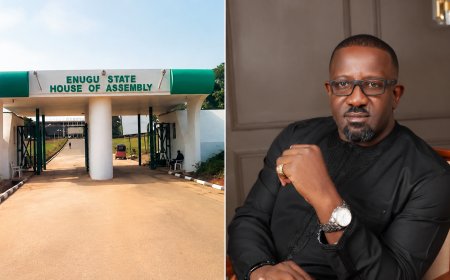
At the centre of the emerging debate is a straightforward argument: Igbo-Eze North Local Government Area of Enugu State has produced the incumbent representative, Hon. Dennis Agbo, who is serving in the National Assembly. With the constituency approaching another electoral cycle, stakeholders advocating a rotational arrangement believe the time has come for Udenu Local Government Area to produce the next representative, with the Obollo bloc being proposed as the preferred destination of the ticket.
For these stakeholders, the argument is not simply about who should occupy a political office. It is about sustaining a fair system of representation that recognises the interests of the two local government areas and the constituent blocs within them.
Their position is that, having had the opportunity to produce the current lawmaker, Igbo-Eze North should allow Udenu to take its turn in 2027. Within Udenu, they further contend that the Obollo bloc deserves consideration under the same principle of rotation.
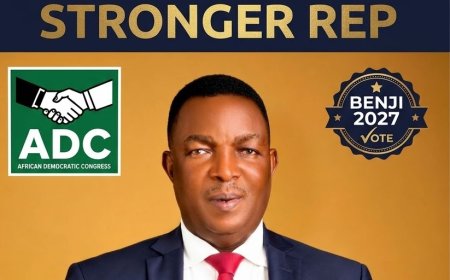
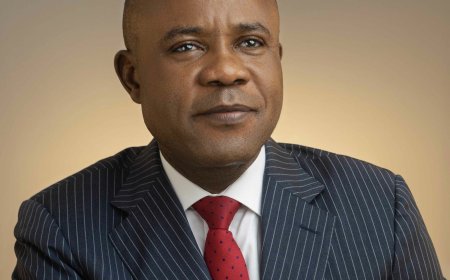
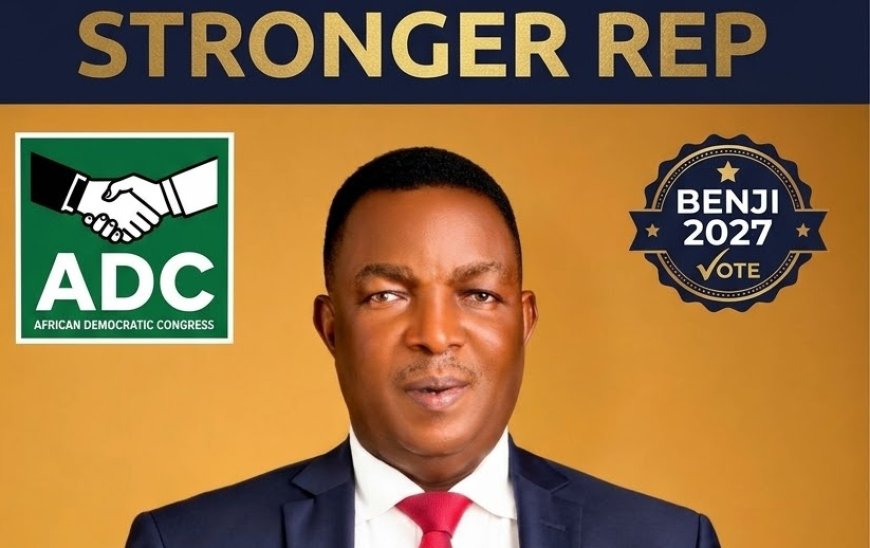
The proposal has consequently brought the candidate of the African Democratic Congress, ADC, for Igbo-Eze North/Udenu Federal Constituency, High Chief Chimaobi Benjamin Sunday Eze into the conversation as a prospective consensus candidate whose supporters believe his background, professional experience and grassroots connections make him suitable for the assignment.
The Case for Rotation
Political representation in a federal constituency comprising two local government areas inevitably raises questions about how opportunities should be shared, particularly where communities seek to maintain a sense of inclusion in the democratic process.
In the case of Igbo-Eze North/Udenu Federal Constituency, the presence of Hon. Dennis Agbo in the House of Representatives provides the immediate context for the argument being advanced by proponents of rotation.
They maintain that the current representation by a lawmaker from Igbo-Eze North strengthens the case for Udenu to produce the next representative. In their view, allowing the seat to move between the two local government areas would promote political balance, encourage cooperation and reassure constituents that representation is not the preserve of one area.
The argument is essentially one of political fairness: where communities share a constituency, the distribution of opportunities to represent them at the national level should, as far as practicable, reflect the interests of all parties.
Although zoning is not a constitutional requirement for electing members of the House of Representatives, political parties and community stakeholders often employ rotational arrangements to manage competition, build consensus and reduce tensions among competing interests.
For supporters of the Udenu position, 2027 presents an opportunity to apply that principle in the interest of a more balanced political arrangement.
Why Obollo Within Udenu?
Having made the case for Udenu, proponents of the arrangement believe the next question should be which bloc within the local government should produce the candidate.
Their answer is Obollo.
Udenu comprises three major political blocs commonly identified as Orba, Udunedem and Obollo. Stakeholders advocating the Obollo position argue that the bloc's population, electoral strength and place in the local government's political structure make it a significant force in any contest for elective office.
They claim that Obollo has more than 52,000 registered voters and the highest number of polling units in Udenu, figures they say underscore its importance in the electoral calculations of political parties.
Beyond its electoral strength, however, the argument for Obollo is anchored on what its proponents describe as an imbalance in the distribution of political opportunities among the three blocs.
According to them, Orba has enjoyed considerable political representation over the years, including producing members of the House of Representatives for multiple terms, a former governor of Enugu State, and ambassadors.
Udunedem, they argue, has also maintained a strong presence in state and national politics, producing a deputy governor, long-serving state legislators and individuals who have occupied ambassadorial positions.
Obollo, by comparison, is said by the proponents of the zoning arrangement to have had fewer opportunities to occupy prominent elective and federal positions, with much of its political representation concentrated at the local government level and in appointed offices.
They contend that zoning the 2027 House of Representatives ticket to Obollo would help address this perceived disparity and strengthen the principle that political opportunities should be shared among the constituent communities.
For them, the demand is not a rejection of the contributions of Orba or Udunedem. Rather, it is a call for an arrangement that gives Obollo an opportunity to participate more prominently in the political leadership of the constituency.
The broader objective, they say, is to build a political culture in which rotation is viewed as a means of promoting inclusion rather than a tool for excluding competing interests.
Why Chimaobi Benjamin Eze?
If the argument for Udenu is anchored on rotation and the case for Obollo on equity, the next question is who can effectively represent the bloc's interests at the National Assembly.
The stakeholders advocating the arrangement have identified High Chief Chimaobi Benjamin Sunday Eze as their preferred candidate, citing his educational background, professional experience, public service record and connection to his community.
Born and raised in Ugbabe, regarded by his supporters as the largest clan in Obollo, Eze is presented as a candidate whose roots and experience could help him understand the concerns of his constituents while engaging effectively with government institutions.
His supporters believe that his combination of academic qualifications and years of professional service provides a foundation for legislative responsibility, public engagement and constituency development.
They also argue that his candidacy would give Obollo an opportunity to present a candidate with experience extending beyond local politics and an understanding of public administration and institutional processes.
A Career Spanning Public Service and Finance
Eze's educational journey began at Ada Obollo Central School and St. Patrick's College, Obollo-Eke.
He proceeded to the University of Nigeria, Nsukka, where he obtained a bachelor's degree in Agriculture and a master's degree in Agricultural Economics. He later earned a Master of Business Administration in Banking and Finance from Benue State University.
He is also a Fellow of the Chartered Institute of Taxation of Nigeria.
His professional career spans agriculture, development administration, local government service, banking-related institutions and taxation.
Among the institutions and assignments in which he worked were agricultural development projects, local government service commissions, project implementation units and the National Board for Community Banks.
He subsequently joined the Federal Inland Revenue Service, where his career took him to several locations across the country, including Abuja, Lagos, Port Harcourt, Asaba, Warri, Nnewi, Makurdi and Owerri.
He also served as a Tax Controller in several states and as State Coordinator for Anambra and Imo.
Supporters contend that this professional exposure gave him an understanding of public finance, revenue administration and the workings of government institutions, experience they believe could prove valuable in legislative representation.
They argue that a member of the House of Representatives must do more than occupy a seat in the National Assembly. Such a representative must understand the legislative process, engage relevant institutions, articulate constituency needs and pursue policies and projects capable of improving the lives of constituents.
For Eze's supporters, his career offers a basis for presenting him as a candidate capable of bringing professional experience to bear on those responsibilities.
Ultimately, his suitability for the position will be determined by the electorate and the political processes through which the party selects its candidate.
Beyond One Candidate
Although Chimaobi Benjamin Eze has emerged as the preferred choice of the stakeholders promoting the Obollo agenda, the underlying debate extends beyond his individual ambition.
At its heart is the question of how political opportunities should be distributed between Igbo-Eze North and Udenu and, within Udenu, among Orba, Udunedem and Obollo.
The fact that Igbo-Eze North currently occupies the federal constituency's seat through Hon. Dennis Agbo has become a central point in the argument for a change in 2027.
Proponents contend that a transition to Udenu would reinforce the spirit of political accommodation and give the second local government area an opportunity to produce the next representative.
They further argue that zoning the ticket to Obollo would extend that principle of fairness to the internal political arrangement within Udenu.
However, the acceptance of such an arrangement would depend on discussions among political parties, community leaders, aspirants and voters. Neither rotation between the local government areas nor zoning among the three blocs is automatic under the Constitution.
The proposed arrangement must therefore compete within the political realities of party nomination processes, electoral laws and the democratic right of eligible aspirants to seek elective office.
Nevertheless, supporters of rotation believe that an agreed political arrangement could reduce unnecessary competition, strengthen cooperation and encourage the emergence of a candidate with broad support across the constituency.
They warn that failure to address the concerns of communities seeking a fair share of representation could deepen internal disagreements and weaken the unity required for a successful electoral campaign.
These concerns, they maintain, make early dialogue and consensus-building important as the 2027 elections approach.
The Search for Consensus
Against this background, stakeholders advocating the Obollo position are calling on political leaders and party executives in Udenu to begin discussions on a zoning arrangement that would give the bloc an opportunity to produce the next House of Representatives candidate.
They are also canvassing support for Chimaobi Benjamin Eze, whom they describe as possessing the experience, exposure and community connection required for the assignment.
Their appeal is that the selection process should consider not only the individual ambitions of aspirants but also the broader interests of the constituency and the need to maintain a fair relationship between its constituent communities.
For them, the argument begins with Igbo-Eze North, which has produced the incumbent representative, Dennis Agbo, and proceeds to Udenu, which they believe should have the opportunity to produce his successor.
Within Udenu, they want the opportunity to extend to Obollo, a bloc they consider sufficiently significant in population, electoral strength and community representation to warrant the ticket.
Whether the proposal will gain the support of the relevant political parties and other stakeholders remains to be seen. What is clear, however, is that equity and rotation are becoming important considerations in the conversation about the constituency's political future.
As the 2027 general elections draw closer, the debate is likely to revolve around three interconnected questions: whether the House of Representatives seat should move from Igbo-Eze North to Udenu, whether Obollo should take its turn within Udenu, and which candidate can best represent the interests of the entire constituency.
For the stakeholders advancing the proposal, their position is unequivocal: the incumbent's origin in Igbo-Eze North strengthens the case for Udenu in 2027; equity within Udenu supports the case for Obollo; and Chimaobi Benjamin Eze is their preferred candidate to carry that aspiration forward.
Their ultimate challenge will be to translate that argument into a broad-based consensus capable of winning the confidence of political leaders, party members and voters across Igbo-Eze North and Udenu.
What's Your Reaction?
 Like
0
 Dislike
0
 Love
0
 Funny
0
 Angry
0
 Sad
0
 Wow
0