























Anambra 2025: 'Body Odour' as a Campaign Catchphrase
How did Anambra reach this low point, especially with a highly qualified leader—a professor, a former World Bank executive, and a past governor of the nation's central bank—at the helm?

By Ike Abonyi


“ _The hardest thing about any political campaign is how to win without proving that you are unworthy of winning.”_ - Adlai Stevenson.
We live in a political environment where finding fault in others is the favoured strategy. This has become a defining characteristic of the ongoing governorship campaigns in Anambra State, ahead of the contentious off-cycle gubernatorial elections scheduled for November 8.
How did Anambra reach this low point, especially with a highly qualified leader—a professor, a former World Bank executive, and a past governor of the nation's central bank—at the helm? How has Anambra descended into a political arena characterised by insults and inappropriate language? The state seems to have lost respect for its values, as even traditional and religious leaders are not immune to disparagement.
Anambra, the home state of illustrious figures like Nnamdi Azikiwe, Emeka Odumegwu Ojukwu, and Alex Ekwueme, along with prominent clerics such as Cardinal Francis Arinze and Blessed Rev. Fr. Cyprian Iwene Tansi, now faces alarming and disheartening narratives as the gubernatorial election day approaches. How has this state devolved into such a scenario, where even a learned professor leads this trend of negative discourse?
Rather than discussing how Anambra can progress to become the Dubai or Taiwan of Nigeria, as promised four years ago, the political conversation has been dominated by petty issues related to certificate grades and personal hygiene. Who has allowed Anambra to fall to such a level?
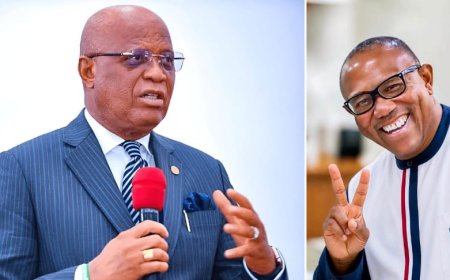
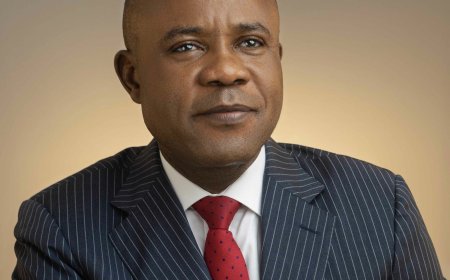
With that preamble this week, we focus on Anambra State, the political and economic heart of Igboland. We see figures like Senator Uche Lilian Ekwunife, a supporter of Bola Tinubu, wearing his campaign insignia and sunglasses reminiscent of Sani Abacha, hurling accusations at her fellow Tinubu supporter, Governor Charles Chukwuma Soludo.
Interestingly, these political contenders are not primarily relying on voter support; instead, they are seemingly counting on a potential glitch from the Electoral Commission and judicial manipulation. These two crucial democratic institutions have regrettably compromised their independence, placing themselves under the influence of the presidency.
The degradation of the political landscape in Anambra has descended to trivial matters, focusing on personal attacks and rumours rather than substantive issues. These distractions seem specifically designed for electoral manipulation rather than genuinely engaging with the voters of Anambra. Despite engaging in this dirty political fight, all involved understand where the hearts and minds of Anambra voters lie as they look toward 2027.
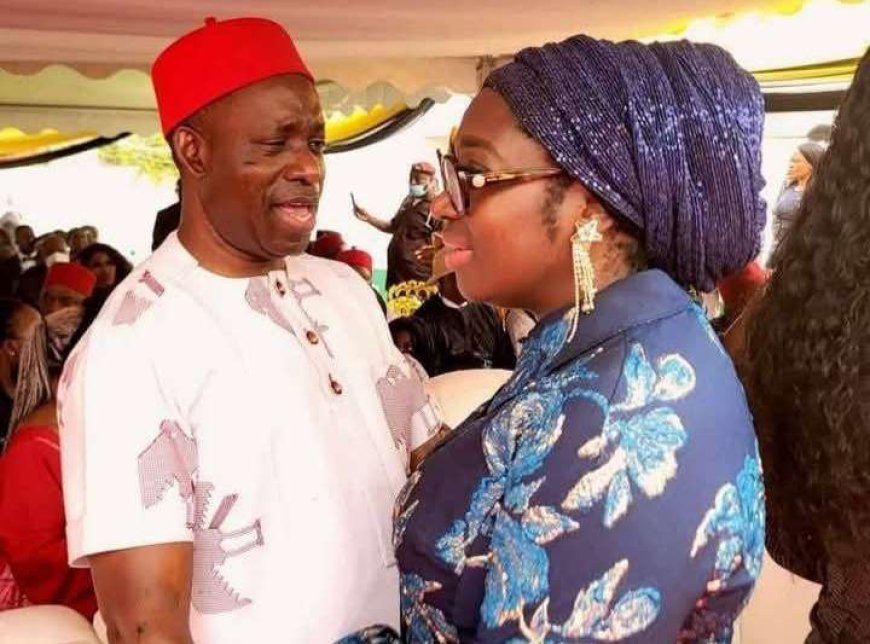
In an unexpected turn, "Body Odour" has become a dominant topic of discussion within Anambra State's political narrative., as Senator Ekwunife, the Anambra State APC Deputy Governorship Candidate, has been vocal about Governor Soludo's alleged poor personal hygiene. According to her, Governor Soludo, "the dirtiest Governor in West Africa". She even extended the fight to Soludo’s wife by sarcastically suggesting she should buy her husband deodorant and mouthwash as part of her "celebrated healthy living campaign".
We cannot ignore the context of these remarks because we are told in an idiomatic expression that there is no smoke without fire. Ekwunife did not just hit the road with this raw denigration. Governor Soludo cast the first stone questioning Ekwunife’s academic qualifications, highlighting the F9 issues, and dismissing the prospect of a woman married into another senatorial district becoming governor. After the F9 emphasis by Soludo, Ekwunife would not just stop at stating her real qualification but diverted to the body odour thing.
But so many things are involved, for you to know details of one's F9 results, or his mouth or body odour, there must have been some closeness which politics is either tearing apart or exposing, depending on the perspective of you, the reader of this discourse. These hot exchanges highlight the intense nature of the gubernatorial campaign in Anambra State, with candidates engaging in a heated conversation over personal character rather than governance issues.
While there has been no direct response from Governor Soludo on Ekwunife’s outburst, Madam Nonye Soludo, Anambra's first lady, indiscreetly fell into the trap and would not let it pass as she hit back at her, declaring her virginity to the musing public, etc. ‘Iko Onu’ in political campaigns adds to the entertainment but adds nothing to the issues. But it appears we are in an era of wives helping husbands in their quarrels involving women. Recall how Ekaette Godswill Akpabio joined the fray to defend her husband in the Natasha Akpoti-Uduaghan impasse. Now Nonye Solodu refusing to let it go has opened a dimension into the brickbats
Unfortunately, these trivial matters dominating political campaigns aren't necessarily relevant to the key issues affecting the state but are instead used to sway voters through emotional or sensational means. These two candidates are focusing on non-issues that resonate emotionally with voters on social media, rather than tackling complex policy problems facing the state, especially the security challenges. These Sensational and provocative topics garner significant media attention, providing wide publicity and increased visibility but deliver nothing reputable to the public good. Such mundane issues only end up creating a more toxic and unhealthy environment and, in the process, heighten the stakes.
All the focus on a candidate's personality, appearance, or personal life rather than their policy positions or achievements, making unsubstantiated or exaggerated claims about opponents or issues to create a negative narrative, has only one motive, to debase the personalities involved. Highlighting non-essential topics is an obvious distraction aimed at diverting attention from more pressing issues or controversies, and this might lead to overlooking or neglecting the critical problems affecting the state.
By repeatedly prioritising non-issues, it can aid voter disillusionment and decreased trust in the political process, especially in a state where voter apathy has been apparent.
What Anambra state is mirroring with these decadent campaigns is the low level the nation's democracy has fallen to. Vote seekers go out to the field not with the arrogance of their achievements or antecedents but with the haughtiness of ‘what can you do we will grab it and run whether you like it or not’. The fight in Anambra state is actually not about votes or voters; rather, it's about the man who will help them manipulate the system.
After the experimental bye-election of August 16, 2025, their arrogance increased, having seen the positives in the test run of the theory ‘what money cannot do, more money will do it’. ‘What naira cannot buy because it's bulky and inconvenient to carry, foreign currency, dollars, Euros, and pounds Sterling will do even more conveniently’.
Going forward to the November 8 critical gubernatorial poll, therefore, voters and media outlets should prioritise fact-checking, critical thinking, and issue-based discussions. By doing so, they can help shift the focus toward more substantive topics and hold politicians accountable for addressing the community's needs.
The real concern in all this is that the outcome of the election will not be a reflection of what the people want. And the blame largely goes to the residents of Anambra State.
In marketplaces, in shops, Churches, bus stops, schools, and all social gatherings, the people openly grumble, but when Election Day comes, the story will be different.
Who is responsible for this? The people, because in a democracy, the buck stops with them. The people are failing to take their destiny into their own hands, but are hoping for another person to come and help them. Election riggers are looking up to their godfather in Abuja while the people are waiting on God, who has already given them the power to determine their fate. What Igbos fail to realise in Nigerian politics is that in a democracy, God is an observer, not a partisan player, but Igbos want God to be a biased observer just because they are doing the right thing. God’s way is not our way. The parable of the weeds in the scripture reminds us that God endorses the existence of good and evil (the wheat and weeds), but lets the good prevail in the end during harvesting. Nigeria has not yet reached the harvesting time. Any wheat that allows the weed to choke it will reap it before harvest time.
Democracy has given the people of Anambra state, aged 18 years and above, the wherewithal to decide their fate, but how many of them have their PVC, and how many of those with PVC will come out to vote and defend their vote?
If Anambra people really want Peter Obi to be President of Nigeria in 2027, November 8, 2025, provides them with an ample opportunity to kickstart their desire by getting PVC, and coming out on the voting day, shunning money, voting their choice, which is Obi Presidency and defending their votes. If you don’t want what you are seeing, change it; if you don’t like what you are hearing, shut it up. If you really want Peter Obi's Presidency in 2027 kickstart it on November 8, 2025. God help us.
What's Your Reaction?
 Like
0
Like
0
 Dislike
0
Dislike
0
 Love
0
Love
0
 Funny
0
Funny
0
 Angry
0
Angry
0
 Sad
0
Sad
0
 Wow
0
Wow
0