














Read Facts about Mojtaba Khamenei, Iran’s new supreme leader
Mojtaba Khamenei has never held an official government position, delivered public speeches, or granted interviews, and only a handful of photographs and videos of him exist in the public domain.

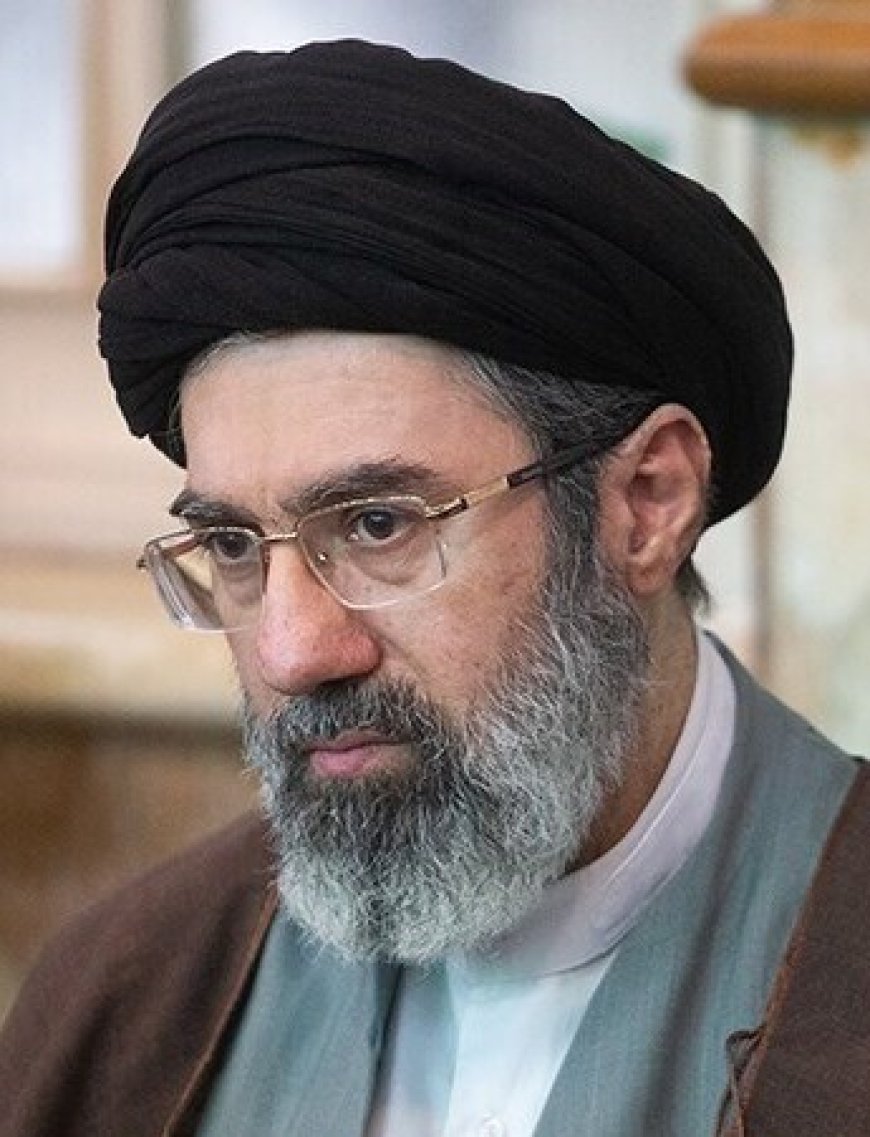


As Nigerians continue to battle with the daily surge in the price of global oil, it is a new dawn in Iran after Mojtaba Khamenei, the son of Iran’s Supreme Leader Ayatollah Ali Khamenei, who was reportedly killed in U.S.–Israeli strikes, was selected as his successor — a development that could prove both historic and controversial for the Islamic Republic.
Unlike his late father, the 56-year-old Mojtaba has spent most of his life away from the public eye. He has never held an official government position, delivered public speeches, or granted interviews, and only a handful of photographs and videos of him exist in the public domain.
Yet despite his low profile, Mojtaba has long been regarded as a powerful figure behind the scenes in Iran’s political establishment. U.S. diplomatic cables published by WikiLeaks in the late 2000s described him as “the power behind the robes,” portraying him as a “capable and forceful” personality within the ruling system.
His emergence as the supreme leader, however, is likely to spark debate. The Islamic Republic was established in 1979 following the overthrow of Iran’s monarchy, and its governing doctrine holds that the supreme leader should be selected based on religious authority and leadership credentials rather than hereditary succession.
Throughout his decades in power, Ali Khamenei rarely spoke directly about who might eventually succeed him. Two years ago, a member of Iran’s Assembly of Experts — the clerical body responsible for choosing the supreme leader — said the elder Khamenei opposed the idea of his son becoming a candidate for the position. Nevertheless, he never publicly addressed the speculation. As Nigerian governement continue to sit on the fence regarding who to support in the ongoing conflict, below are certain facts that might be of great interest about Iran’s new supreme leader
Who is Mojtaba Khamenei?
Born on September 8, 1969, in the northeastern city of Mashhad, Mojtaba is the second of Ali Khamenei’s six children. He attended the prestigious religious Alavi School in Tehran for his secondary education.
At the age of 17, Mojtaba reportedly served briefly in the military during the Iran–Iraq War, according to Iranian media. The brutal eight-year conflict deepened Iran’s distrust of the United States and Western countries, which had backed Iraq.
In 1999, Mojtaba relocated to the holy city of Qom — one of the most important centres of Shia scholarship — to pursue advanced religious studies. Notably, he did not begin wearing clerical robes until that period. His decision to enrol in a seminary at the age of 30 raised questions among observers, as most clerics begin their training much earlier.
Today, Mojtaba remains a mid-ranking cleric — a factor that could complicate his acceptance as Iran’s supreme leader.
Before his selection, some Iranian media outlets and figures close to the country’s power structure began referring to him as “Ayatollah,” a senior clerical title. Analysts believe the shift was intended to elevate his religious credentials and present him as a legitimate candidate for leadership.
Within Iran’s seminary hierarchy, attaining the rank of Ayatollah and teaching advanced theological classes are regarded as key indicators of scholarly authority and religious competence — qualities typically expected of a supreme leader.
There is precedent for such rapid elevation. Ali Khamenei himself was promoted to the rank of Ayatollah shortly after he became Iran’s second supreme leader in 1989.
Allegations of political interference
Mojtaba first came under public scrutiny during the 2005 presidential election that brought hardline populist Mahmoud Ahmadinejad to power.
In an open letter addressed to Ali Khamenei, reformist candidate Mehdi Karroubi accused Mojtaba of interfering in the election through elements of the Islamic Revolutionary Guard Corps (IRGC) and the Basij militia. The groups were allegedly involved in distributing money to religious organisations to help secure Ahmadinejad’s victory.
The allegations resurfaced in 2009 when Ahmadinejad’s re-election triggered widespread protests across the country, later known as the Green Movement. During the demonstrations, protesters chanted slogans opposing the possibility that Mojtaba could one day inherit the position of supreme leader.
Mostafa Tajzadeh, then deputy interior minister, described the election outcome as an “electoral coup.” He later spent seven years in prison — a punishment he said was carried out at Mojtaba Khamenei’s direct request.
Following the disputed election, reformist leaders Mir-Hossein Mousavi and Mehdi Karroubi were placed under house arrest. According to Iranian sources cited by BBC Persian, Mojtaba met Mousavi in February 2012 and urged him to abandon his protests.
An uncertain leadership
Now elevated to the highest office in Iran, many observers expect Mojtaba to continue the hardline policies associated with his father’s rule.
Some analysts also argue that a man who has reportedly lost his father, mother and wife in U.S.–Israeli strikes may be unlikely to show concessions toward Western powers.
At the same time, Mojtaba faces enormous challenges. Iran is grappling with deep economic difficulties, political tensions and growing public dissatisfaction.
His leadership experience remains largely untested, and concerns that the Islamic Republic is drifting toward dynastic rule could intensify domestic criticism of the regime.
There are also security concerns. Israel’s defence minister warned last week that whoever succeeded Ali Khamenei would become “an unequivocal target for elimination.”
For Mojtaba Khamenei, the task ahead is formidable: preserving the Islamic Republic while convincing Iranians that he has both the legitimacy and the capability to lead the nation through one of the most turbulent periods in its history.
What's Your Reaction?
 Like
0
Like
0
 Dislike
0
Dislike
0
 Love
0
Love
0
 Funny
0
Funny
0
 Angry
0
Angry
0
 Sad
0
Sad
0
 Wow
0
Wow
0