



































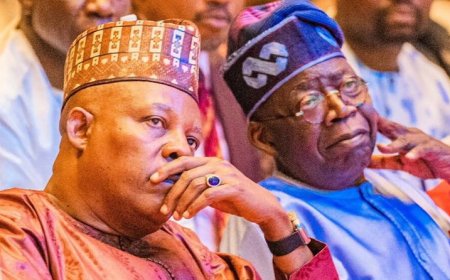



NEWS ANALYSIS: Confusion trails Supreme Court Decisions on ADC, PDP
More pressing is the ticking clock. INEC has set May 10 as the deadline for political parties to submit their membership registers ahead of the 2027 general elections

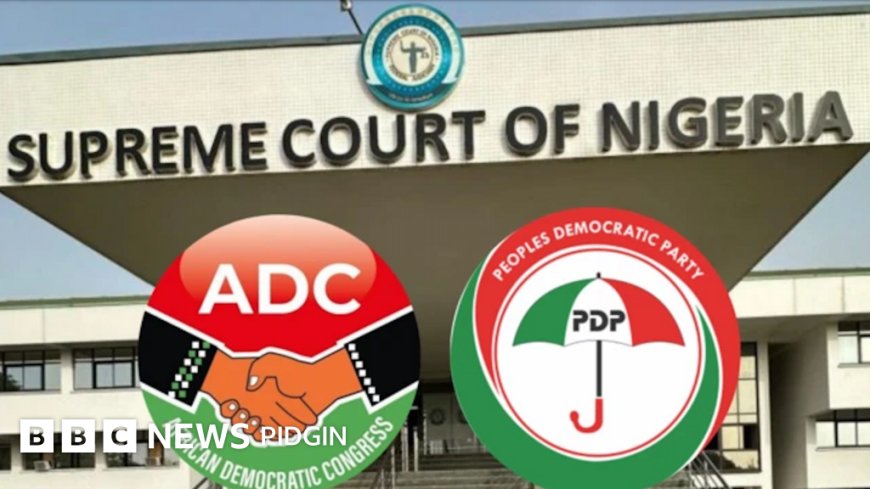
Two separate Supreme Court panels, on Thursday, delivered critical judgements on the life wires of two opposition political parties, the Peoples Democratic Party (PDP) and the African Democratic Congress (ADC).


While the PDP panel was split in the voiding of Tanimu Turaki-led Ibadan national convention of November 15 and 16 2025, and the subsequently sacking of the Turaki group, the panel members were unanimous in the subsequent sacking of Abdulrahaman Mohammed and Samuel Anyanwu as acting leaders of the PDP.
What the judgment means for the party is that it left the PDP without leadership. The judgment effectively restored authority to the party’s recognized internal leadership structure as it existed prior to the disputed actions.
In its directive, the court noted that relevant institutions, including the Independent National Electoral Commission (INEC), financial institutions, and security agencies, should take cognizance of the ruling and refrain from recognizing any authority derived from the annulled Ibadan convention or the invalidated acting leadership.
The ADC Matter
On the case of the African Democratic Congress (ADC) the Supreme Court ruling restored the leadership of David Mark as National Chairman.
While it may appear like a decisive victory for the opposition party, a closer look shows the crisis is far from resolved.
While the apex court set aside the order of the Court of Appeal that had directed parties to maintain the status quo ante bellum, it stopped short of delivering a final verdict on the underlying leadership dispute.
The Supreme Court, in a unanimous decision by a five-member panel led by Justice Mohammed Lawal Garba, ruled that the Court of Appeal acted beyond its jurisdiction by issuing orders after dismissing the appeal before it.
However, the court only allowed part of Mark’s appeal and directed all parties to return to the trial court for continuation of hearing. This means the substantive issue—who legitimately leads the ADC—remains unresolved.
In effect, the restoration of the Mark-led executive is temporary, pending the final determination of the case at the lower court.
Despite the apparent legal victory, the existence of multiple factions within the party continues to pose a threat to its stability. The ongoing litigation creates uncertainty around decisions taken by the current leadership, especially if the trial court eventually rules otherwise.
This lingering legal tussle weakens the party’s internal cohesion at a critical political moment.
More pressing is the ticking clock. The Independent National Electoral Commission (INEC) has set May 10 as the deadline for political parties to submit their membership registers ahead of the 2027 general elections.
With barely days to meet this requirement, the ADC faces a logistical and legal challenge. Any dispute over the legitimacy of the party’s leadership could complicate the submission process or even raise questions about the authenticity of the register presented.
If factions fail to align quickly, there is a risk of parallel submissions or internal disputes over which list represents the authentic membership of the party. Such confusion could attract regulatory scrutiny or even sanctions from INEC.
Although the Supreme Court ruling strengthens the position of the Mark-led leadership for now, it is, at best, an interim relief rather than a conclusive win.
Until the trial court delivers a final judgment and the party resolves its internal divisions, the ADC remains in a precarious position—caught between legal uncertainty and electoral deadlines.
In practical terms, the party may have won a battle, but the larger war over its leadership and organisational stability is still ongoing.
What's Your Reaction?
 Like
1
Like
1
 Dislike
0
Dislike
0
 Love
0
Love
0
 Funny
0
Funny
0
 Angry
0
Angry
0
 Sad
0
Sad
0
 Wow
0
Wow
0