






























States Push for Electricity Pricing Reform to End Subsidy Reliance, Attract Investment
The operators said that the current federal intervention in pricing is creating uncertainty for investors and preventing the sector from becoming financially sustainable

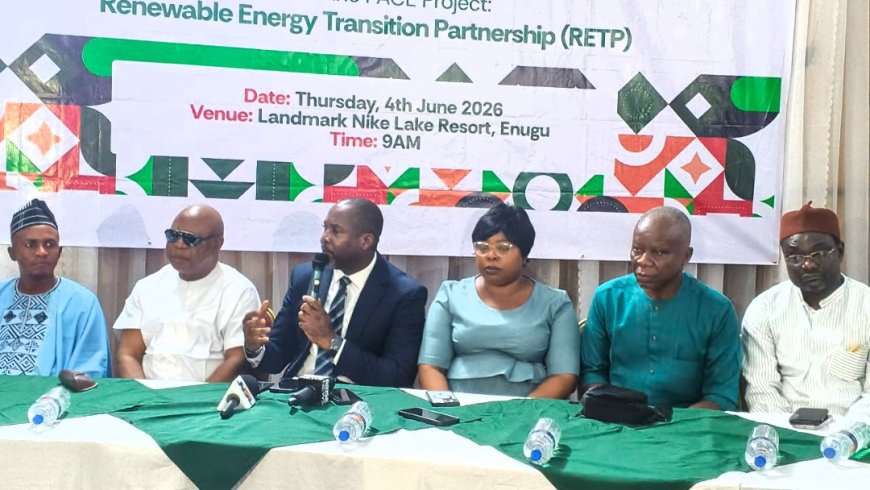
State electricity regulators have commenced a bottom-up overhaul of Nigeria’s power pricing system, stating that federal subsidies are stifling investment and that states should lead the shift to cost-reflective tariffs.


Addressing stakeholders workshop on Electricity price reforms and Sub-National regulation, the operators said that the current federal intervention in pricing is creating uncertainty for investors and preventing the sector from becoming financially sustainable.
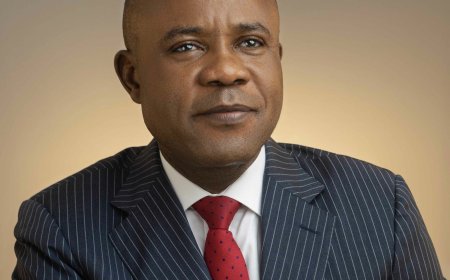
Chairman of the Enugu Electricity Regulatory Commission, Mr. Chijioke Okonkwo, said that states now have direct interface with operators and consumers, making them better placed to set accurate prices.
“Customers have a different experience in the electricity that is being delivered to them. We’re getting to that point where we can actually determine the price of how people pay for electricity,” Okonkwo said.
He argued that states should move away from consumption-level subsidies and instead consider targeted support at the project development stage.
“How can the states do something different by probably implementing their own subsidy at the development of projects and rather than implement it at the consumption level?” he asked.
Okonkwo said the goal is to move Nigerians to use electricity productively where they can actually pay for what they consume while ensuring service providers recover their revenue in full.
He framed the reform as a bottom-up process: “We are on ground now. We are the ones that are interfacing directly with the operators. At a subnational level, we can reach and develop regulations that actually affect the people directly.”
Okonkwo said the federal government’s current model of subsidizing generation is undermining long-term investment.
“If there is a subsidy arrangement in place, potential investors are reluctant to take their leap of faith. Why? Because the sector is not driven by a contract that they can rely on, policies can change tomorrow, and if you are making an investment in the power sector, it is usually considered as a long-term investment.”
He added that states are now working to ensure tariffs cover costs from generation through transmission to distribution, so operators can reinvest. “We are proposing that customers pay for what they consume. And that should give any potential investor confidence to invest because I’m going to recover my money.”
Benue State Commissioner for Power, Renewable Energy and Transport, Hon. Joseph Ter Jir, said the workshop is the starting point for aligning state regulations with federal policy. “Legalizing it is the first step. And the outcome of this workshop would reach the policy level of not just the Federal Republic of Nigeria but every state’s executive council.”
Ter Jir said the aim is for the federal government to gradually withdraw from imposing or implementation of subsidy in the electricity industry. He compared the desired outcome to the telecoms sector, where competition and cost recovery drove rapid expansion.
The Executive Director, Legal and Regulatory at the Abia State Electricity Regulatory Authority, Iguwo Ukwu, said that tariff reviews must protect low-income households, rural communities, public schools and hospitals.
"Subsidy has to be looked for from different angles, which is then called something like funding for electricity bills,” Ukwu said.
He said Abia is conducting a tariff review to determine the actual cost of generation, transmission and distribution, with input from customers, industries, distribution companies, civil society and traditional rulers. “That will help you to target trust and reduce resistance,” he said.
Ukwu also stressed the need to upgrade infrastructure to reduce power losses, noting that customers are more willing to pay when service delivery improves.
Declaring the workshop open on behalf of Governor Peter Mbah, the Secretary to the Enugu State Government, Prof. Chidiebere Onyia, said states now have unprecedented opportunities to shape their electricity future through sub-national electricity markets.
He noted that Enugu had already moved to implement the Electricity Act through the enactment of the Enugu State Electricity Law and the establishment of the Enugu State Electricity Regulatory Commission.
According to Onyia, the viability of emerging state electricity markets will depend largely on pricing frameworks that balance affordability for consumers with cost recovery for operators and long-term sector sustainability.
He stressed that tariff structures would influence investment decisions, operational efficiency, market reliability and the overall success of state electricity reforms.
“The decisions made today will have far-reaching implications for households, businesses, industries and future generations,” Onyia said, urging stakeholders to collaborate on developing competitive and efficient electricity markets that can support economic transformation.
What's Your Reaction?
 Like
0
Like
0
 Dislike
0
Dislike
0
 Love
0
Love
0
 Funny
0
Funny
0
 Angry
0
Angry
0
 Sad
0
Sad
0
 Wow
0
Wow
0