
















2027: Ibadan Declaration and Nigeria’s Opposition Search for Common Ground
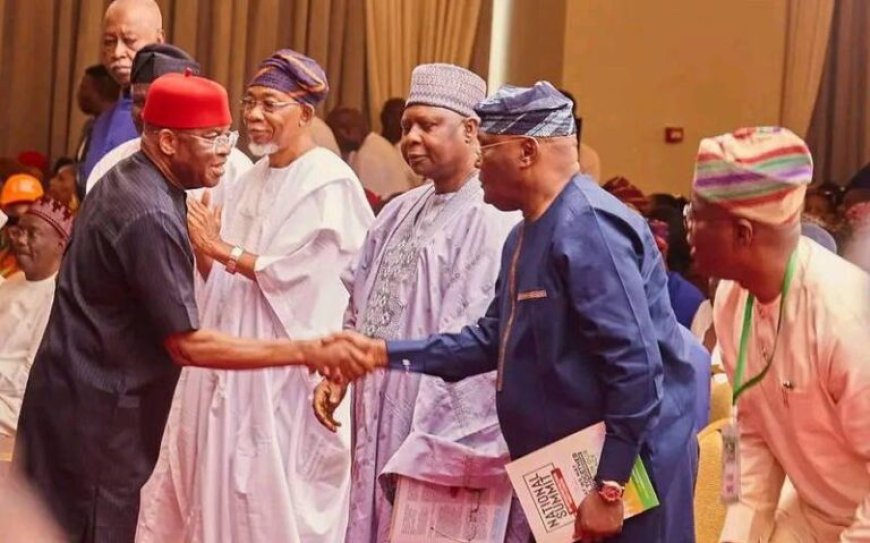
Major opposition parties gathered in Ibadan, Oyo state capital on Saturday for a summit where they made far reaching resolutions including the possibility of fielding a joint presidential ticket

By Onyekaozulu Ofoma


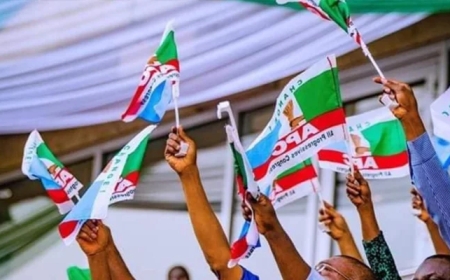
By all indications, Nigeria’s political landscape is entering a defining phase. With barely a year to the 2027 general elections, a broad coalition of opposition figures is attempting something that has historically proven difficult: unity. At the heart of this renewed effort lies a growing belief among political actors and observers that the opposition must either collaborate or risk gradual irrelevance in a system increasingly dominated by the ruling All Progressives Congress (APC).
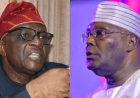
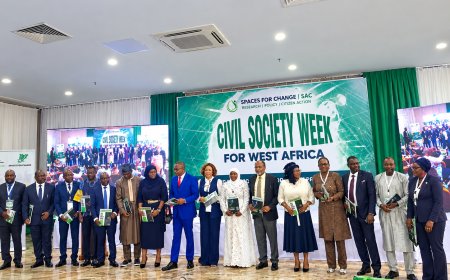
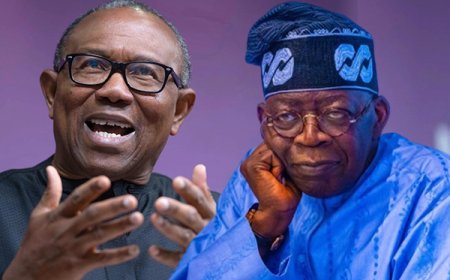
This emerging narrative—of pressure forging cohesion—came into sharp focus at a high-profile national summit held in Ibadan, Oyo State on Saturday. There, an array of political heavyweights, including former Vice President Atiku Abubakar, Labour Party’s Peter Obi, former Kano State governor Rabiu Musa Kwankwaso, former Rivers State governor Rotimi Amaechi, and ex-Osun governor Rauf Aregbesola, convened to deliberate on what many described as an existential moment for Nigeria’s democracy.
A Shared Concern: Shrinking Democratic Space:
The communiqué issued at the end of the summit left little doubt about the opposition’s collective anxiety. It warned of what participants described as “machinations” by the APC to entrench itself as a dominant political force, potentially edging Nigeria toward a one-party state.
Whether exaggerated or grounded in observable trends, this fear reflects a deeper unease about the health of Nigeria’s democratic system. Since the country’s return to civilian rule in 1999, multi-party competition has been a central pillar of governance. Yet, critics argue that recent developments—ranging from defections to alleged institutional bias—have begun to erode that competitive balance.
Oyo State Governor Seyi Makinde, who hosted the summit, articulated this concern in stark terms. Democracy, he warned, is rarely dismantled in dramatic fashion. Instead, it weakens incrementally—through the steady narrowing of political space, the marginalisation of dissenting voices, and the gradual disappearance of viable alternatives.
“When opposition becomes ineffective,” Makinde noted, “democracy itself begins to lose meaning.”
The Ibadan Convergence: Strategy or Symbolism?
The Ibadan summit was as much about optics as it was about substance. Bringing together figures with divergent political histories and ambitions was, in itself, a statement of intent. For decades, Nigeria’s opposition has been plagued by fragmentation, personality clashes, and ideological inconsistency.
The APC itself emerged in 2013 from a similar coalition of opposition forces, a strategy that ultimately unseated the then-ruling Peoples Democratic Party (PDP) in 2015.
Now, opposition leaders appear eager to replicate that formula—this time against the APC.
Central to their discussions was the possibility of a unified presidential ticket for 2027. The communiqué confirmed that participating parties would work toward presenting a single candidate, a move aimed at avoiding the vote-splitting that has historically benefited incumbents.
Such an arrangement, however, is easier proposed than executed. The personalities involved—many of whom have previously contested against one another—will need to navigate complex negotiations over power-sharing, policy direction, and leadership.
Still, the willingness to entertain such a strategy suggests a recognition of political reality: divided, the opposition stands little chance against a well-entrenched ruling party.
Allegations and Counter-Allegations:
Underlying the push for unity are persistent allegations of interference and suppression. Opposition figures claim they have faced obstacles in organising events, including difficulties securing venues and alleged attempts to disrupt gatherings.
Ahead of the Ibadan summit, African Democratic Congress (ADC) spokesperson Bolaji Abdullahi publicly accused the APC of plotting to frustrate the meeting. While these claims remain unproven—and the ruling party has not issued a formal response—they have reinforced perceptions among opposition supporters that the playing field is uneven.
The communiqué also took aim at the Independent National Electoral Commission (INEC), questioning its neutrality. It called for the removal of its chairman, alleging bias in favour of the ruling party—a charge that, if substantiated, would strike at the core of electoral credibility.
INEC has, in the past, defended its independence, but public confidence in electoral institutions remains a recurring challenge in Nigeria’s democracy.
Economic Realities Fuel Political Urgency:
Beyond political strategy, the summit also reflected broader national anxieties—particularly around the economy.
Political economist Pat Utomi delivered one of the most striking interventions, using personal anecdotes to illustrate the widening gap between living costs and average income.
His example of spending nearly ₦250,000 to fill a fuel tank, juxtaposed with reports that many Nigerians survive on less than ₦100,000 monthly, underscored what he described as a “fundamentally broken system.”
These economic pressures are not abstract. Rising food prices, persistent insecurity affecting agricultural production, and currency volatility have combined to create a cost-of-living crisis that touches millions of households.
For the opposition, these conditions present both a challenge and an opportunity. While economic hardship can fuel public dissatisfaction with incumbents, it also demands credible policy alternatives—something critics argue opposition parties have not always provided.
Utomi’s call for “leadership with character” and context-specific policies highlights a recurring theme: that Nigeria’s challenges are not merely technical, but moral and institutional.
Security and the Question of Governance
Security concerns also featured prominently in the summit’s deliberations.
Former Senate President David Mark painted a grim picture, citing thousands of conflict-related deaths and daily incidents of violence and abduction.
Such statistics, while often debated, reflect a widespread perception that insecurity remains one of Nigeria’s most pressing challenges. From banditry in the northwest to separatist tensions in the southeast and insurgency in the northeast, the country faces a complex web of threats.
Mark’s criticism of the government’s response—that it appears more focused on political calculations than on national security—echoes sentiments frequently expressed by opposition figures.
Yet, the issue also raises broader questions about governance capacity, resource allocation, and institutional reform—areas where any future administration, opposition or otherwise, will be tested.
The Historical Weight of Ibadan:
The choice of Ibadan as the summit’s venue was not accidental. As Makinde noted, the city has long served as a political nerve centre in southwestern Nigeria, playing host to key constitutional and political developments in the country’s history.
By convening there, organisers sought to evoke a sense of continuity with past moments of national reflection and transformation. Whether the summit will ultimately join that lineage remains to be seen.
Between Unity and Ambition:
Despite the rhetoric of unity, significant hurdles remain. Nigerian politics is deeply personalised, with loyalties often tied to individuals rather than institutions or ideologies. Aligning the ambitions of multiple high-profile politicians—each with a national support base—will require compromise and, inevitably, sacrifice.
There is also the question of trust. Previous attempts at opposition coalitions have faltered due to internal disagreements and shifting alliances. Maintaining cohesion over the next two years will demand not just shared objectives, but mechanisms for conflict resolution and collective decision-making.
Democracy at a Crossroads:
At its core, the Ibadan summit reflects a broader debate about the nature and future of Nigerian democracy. Is the system evolving toward greater consolidation, or is it at risk of losing its pluralistic character?
For opposition leaders, the answer is clear: without effective competition, democracy becomes hollow. For the ruling party, however, electoral success is often framed as a reflection of popular mandate rather than systemic imbalance.
The truth likely lies somewhere in between. Democratic systems naturally produce dominant parties at times, but their legitimacy depends on the continued possibility of alternation in power.
Looking Ahead to 2027:
As the political calendar advances, the stakes will only rise. The opposition’s commitment to fielding candidates—and potentially a unified ticket—sets the stage for what could be one of Nigeria’s most closely watched elections.
Much will depend on how the coming months unfold: whether electoral reforms are enacted, whether institutions maintain credibility, and whether political actors prioritise national interest over partisan gain.
For now, the Ibadan summit stands as a marker of intent—a signal that, despite longstanding divisions, Nigeria’s opposition is at least willing to explore the path of cooperation.
Whether that path leads to genuine transformation or dissolves into familiar patterns of fragmentation will shape not just the outcome of the 2027 elections, but the trajectory of Nigeria’s democracy itself.
What's Your Reaction?
 Like
0
Like
0
 Dislike
0
Dislike
0
 Love
0
Love
0
 Funny
0
Funny
0
 Angry
0
Angry
0
 Sad
0
Sad
0
 Wow
0
Wow
0