





















Fight Corruption, Not Masses: Why Nigeria Must Return the Oil Subsidy
The removal of the oil subsidy by the Tinubu administration has plunged Nigeria headfirst into its worst economic crisis in national history


By SKC Ogbonnia


The debate on the oil subsidy is back on the front burner. But I have been consistent on this issue regardless of the government in power or whose ox is gored. In the year 2015, I authored the piece, "Removing the oil subsidy is a lame excuse." The wisdom of that warning has never been clearer. The removal of the oil subsidy by the Tinubu administration has plunged Nigeria headfirst into its worst economic crisis in national history. Governments exist to protect their people from the harsh volatility of global markets, not to surrender them to it. Governments exist to prioritize the welfare of its citizens, not the politics of the moment. The truth is that the country never had a subsidy problem; it has a corruption problem.
The gist of my original piece remains profound: fight corruption within the subsidy regime, not the masses.
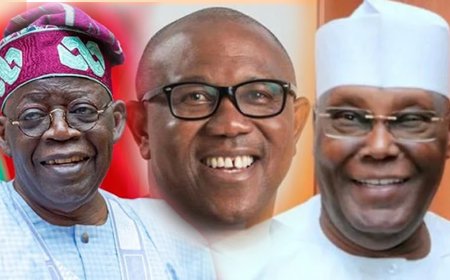
Make no mistake about this: The fundamental error is not just adopting a flawed policy which was, of course. endorsed by the pre-election establishment, including prominent opposition leaders. As at then, it was framed as an unavoidable fiscal sacrifice. President Bola Ahmed TInubu began to own the blame by stubbornly refusing to reverse course once it was clear the program became an embarrassing failure. True leadership demands pragmatic adaptation, yet the administration doubled down on an economic disaster that destroyed small businesses and household survival. Introducing a program that increases the cost of living tenfold while freezing the minimum wage is fundamentally cruel. The blatant refusal to acknowledge that the removal was both unnecessary and catastrophic remains mind-boggling. The government simply chose ideological pride over the economic reality of its citizens.
The immediate proof of this failure is the catastrophic hyperinflation that was unleashed the moment the subsidy was killed. Stripping this vital lifeline caused the cost of basic commodities to skyrocket exponentially, with essential food items and everyday goods surging by up to ten times their previous costs. This reality entirely rubbishes President Tinubu’s frequent argument that his administration now dishes out far more federation revenue to state governors than in the past because of the subsidy savings. Sending more paper currency to state capitals is a meaningless metric when hyperinflation has destroyed the purchasing power of that money. Increased allocations are a drop in the ocean when the actual cost of governance and the price of survival have grown tenfold. The masses cannot eat nominal allocations; they need real, stable economic relief. What is important now is to do the right thing and reverse this policy.
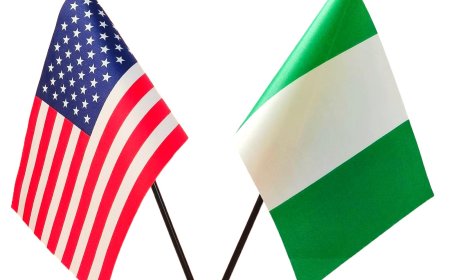
Crucially, the Nigerian masses simply cannot survive the total liberalization of fuel pump prices. It is a grotesque economic injustice to expect Nigerians whose minimum wage stands at a meager N70,000.00 per month to pay fuel prices comparable to or higher than citizens of the United States where their minimum wage is about N2.8 million naira. Besides, most Americans who earn minimum wage also receive food, energy, and housing vouchers. Thus, forcing global pricing onto the Nigerian population surviving on starvation-level wages is an existential threat to millions of households.
To understand the absurdity of Nigeria's current trajectory, look at how successful oil-producing nations leverage their natural wealth. Members of the Organisation of the Petroleum Exporting Countries (OPEC)—such as Saudi Arabia, Kuwait, Qatar, and Venezuela—do not view energy subsidies as a wasteful luxury. They view them as an unalienable sovereign right. These countries intentionally anchor domestic fuel prices far below global market rates to reduce production costs, lower the cost of living, and stimulate local economies. It is a profound irony that Nigeria forces its citizens to pay punishing, market-driven international prices for a resource pumped from their own backyard.
Furthermore, the narrative that subsidies are an outdated economic anomaly is a blatant lie contradicted by global realities. The world’s leading capitalist superpowers are the biggest subsidy spenders on earth. The United States government heavily subsidizes its critical sectors, pouring billions of dollars into its agricultural sector annually to keep food cheap, alongside massive tax breaks for its fossil fuel, energy, water, and technology industries. Across the Atlantic, the United Kingdom operates on an identical playbook, heavily subsidizing transport infrastructure and public healthcare. During global energy crises, the UK stepped in with massive price guarantees, effectively subsidizing electricity and gas for millions of households. Why should Western nations protect their citizens' food and energy costs while Nigeria is bullied into exposing its people to absolute destitution?
In Nigeria, fuel is the lifeblood of survival. It powers small businesses, working-class transit, and dictates the price of food moved from farms to markets. Stripping the subsidy without viable mass transit, stable electricity, or a functional safety net has triggered an unprecedented cost-of-living crisis. The justification that the subsidy regime was riddled with fraud is a confession of state failure. If a house has a leaking roof, you fix the roof; you do not burn down the entire house. The thieves who falsify shipping documents and smuggle fuel are high-profile individuals operating within well-regulated networks.
The government possesses the full security apparatus and financial intelligence required to track and prosecute these economic saboteurs who bastardized the subsidy regime. Choosing to eliminate the subsidy because bureaucrats cannot police the borders is a cowardly evasion of duty.
Nigeria must reverse this catastrophic policy and return to a managed oil subsidy regime immediately. This return must be paired with an uncompromising, iron-fisted war against internal corruption. The government must digitize supply chains, audit fuel importers transparently, punish corrupt actors within regulatory agencies, and optimize local refining capacity. The objective fact is that Nigeria knows the individuals who defaulted on the subsidy regime. Sadly, instead
of prosecuting them, the government continues to eulogize them. So, who is fooling whom?
The message is simple and must ring clear from the steps of Aso Rock: fight the corruption within the subsidy regime, never the people.
SKC Ogbonnia, a leadership scholar, writes from Ugbo, Awgu LGA, Enugu State
What's Your Reaction?
 Like
0
Like
0
 Dislike
0
Dislike
0
 Love
0
Love
0
 Funny
0
Funny
0
 Angry
0
Angry
0
 Sad
0
Sad
0
 Wow
0
Wow
0