


































WHEN EVIDENCE SILENCES NOISE: A Response to Critics of Rep. Paul Nnamchi’s Scholarship Initiative
Education is not a transactional handout; it is a long-term investment. A scholarship does not just pay school fees—it creates opportunities, builds human capital, and alters the trajectory of entire families



By Onyekachi Nduka
In public service, there is a familiar pattern: critics demand proof, and when proof is presented, they move the goalpost.
This has become the latest strategy of those who have relentlessly questioned the performance of Prof. Paul Sunday Nnamchi.
For months, detractors loudly challenged the existence of his much-publicized scholarship programme. They asked: Where are the beneficiaries? Who has actually received support?
It was a fair question—one that demanded transparency and accountability.
Now, that question has been decisively answered.
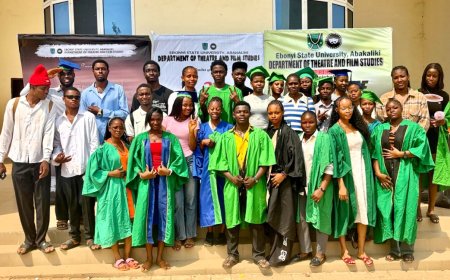
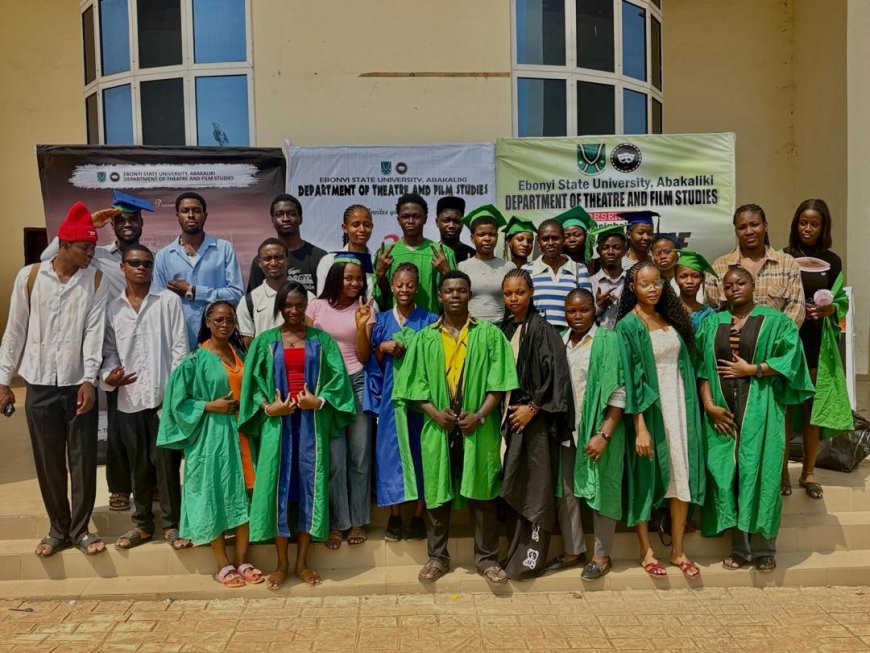
A comprehensive list of scholarship beneficiaries has been made public—names, institutions, and verifiable details that clearly demonstrate that real students, from real families, are benefiting from this intervention.
This is not propaganda. It is evidence. It is impact. It is governance that touches lives in measurable ways.
Yet, instead of acknowledging this, critics have shifted their argument.
Suddenly, the issue is no longer whether the scholarships exist, but how much is being spent on each student. They now attempt to compare the cost of education support with past practices—particularly the distribution of tricycles (keke) and motorcycles by previous office holders.
This comparison, however, is deeply flawed and intellectually dishonest.
First, education is not a transactional handout; it is a long-term investment. A scholarship does not just pay school fees—it creates opportunities, builds human capital, and alters the trajectory of entire families. The value of educating a young person cannot be reduced to a simplistic monetary comparison with the cost of a motorcycle.
Secondly, governance must evolve. The needs of the people are not static. While empowerment schemes like distribution of keke and motorcycles may provide short-term economic relief, they do not substitute for sustainable development.
Education equips beneficiaries with skills, knowledge, and capacity that endure far beyond the lifespan of any physical asset.
Thirdly , the attempt to pit one form of empowerment against another is a distraction from the real issue: impact. The question should not be whether one initiative costs more than another, but whether it delivers meaningful and lasting value to the people.
What is evident is this: when challenged, Prof. Paul Sunday Nnamchi has responded with facts. When asked for evidence, he provided it. That is the hallmark of accountable leadership.
Criticism is essential in a democracy—but it must be grounded in sincerity, not shifting narratives. If the goal is truly the development of the constituency, then honest engagement must replace selective outrage.
The people deserve more than noise. They deserve truth, consistency, and leadership that invests in their future.
And on that score, the conversation must now move forward.
Elder Barrister Nduka, an Attorney, is a legal practitioner in the Federal Capital Territory Abuja
What's Your Reaction?
 Like
0
Like
0
 Dislike
0
Dislike
0
 Love
0
Love
0
 Funny
1
Funny
1
 Angry
0
Angry
0
 Sad
0
Sad
0
 Wow
0
Wow
0