














Anioma State Agitation: Between Historic Aspiration and Emerging Political Fault Lines
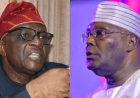
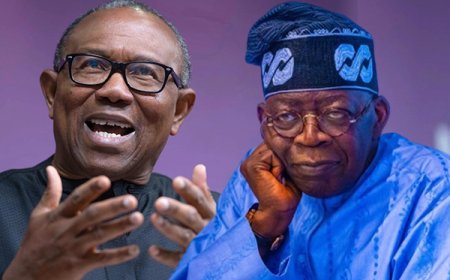
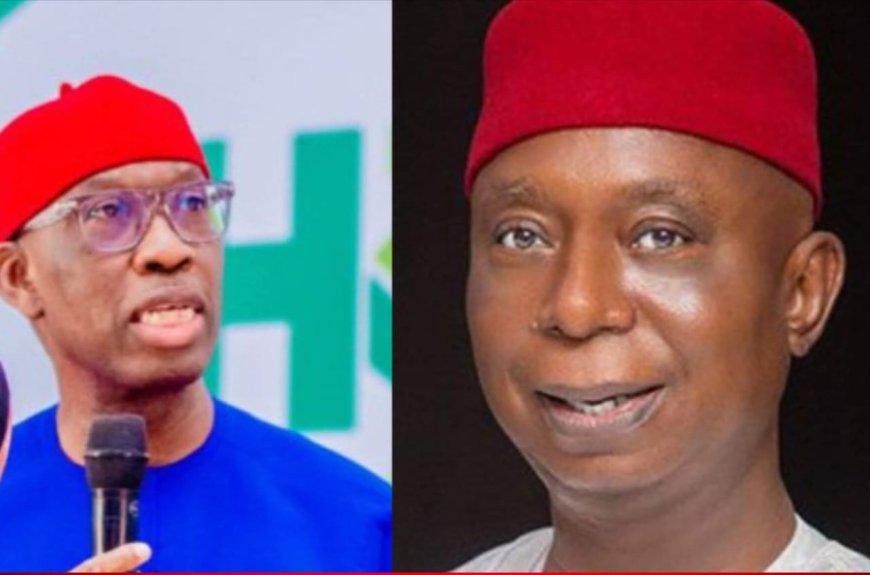
Anioma state creation proposal has become a subject of political muscle flexing between Sen Ned Nwoko and former Delta Gov Okowa

By Onyekaozulu Ofoma


For decades, the question of equity within Nigeria’s geopolitical structure has remained a recurring theme in national discourse. At the heart of this debate lies the South-East, a region that stands out—not for dominance—but for what many of its people perceive as structural disadvantage.
Among Nigeria’s six geopolitical zones, the South-East remains the only one with just five states, while others boast six, except the North-West, which has seven. This numerical imbalance has long fueled claims of marginalization and exclusion, particularly in matters of federal representation, resource allocation, and political influence.
It is within this context that renewed calls for state creation have persisted, with proposals such as Adada, Aba, Etiti, and ANIM states frequently surfacing during constitutional review exercises. Yet, in a surprising twist that has both energized and polarized stakeholders, a unique proposal emerged—not from within the South-East proper, but from Delta North in the South-South zone.
The proposal for the creation of Anioma State, championed by Senator Ned Nwoko, represents a bold reimagining of regional identity and political structure. Unlike previous proposals, Nwoko’s vision goes beyond merely carving out a new state; it seeks to redraw geopolitical boundaries. His plan advocates for the creation of Anioma State from Igbo-speaking areas of Delta State, potentially incorporating parts of Anambra State and even extending to the Igbanke people of Edo State.
Most significantly, he proposes that the new state be annexed to the South-East geopolitical zone, with Asaba as its capital.
This dual-purpose proposal—aimed at both unifying Igbo-speaking populations across state lines and correcting the numerical imbalance in the South-East—has struck a chord among many proponents of Igbo cohesion. For them, Anioma State is not just a political project; it is a cultural and historical reconciliation, a step toward reintegrating communities that share linguistic and ancestral ties but are administratively separated.
The proposal gained further traction when the Senate President, Godswill Akpabio, publicly expressed optimism about its legislative prospects. His remarks, suggesting that Anioma State could be among the most viable proposals before the National Assembly, injected a dose of credibility and momentum into the campaign.
For Nwoko, it was a political boost that not only elevated the proposal’s national visibility but also strengthened his standing ahead of the 2027 electoral cycle.
However, as quickly as enthusiasm surged, it has begun to encounter resistance—most notably from within Anioma itself. A significant turning point came with the intervention of former Delta State governor, Ifeanyi Okowa. Himself an Ika-Igbo and a key political figure in Delta North, Okowa has publicly challenged the direction and timing of Nwoko’s proposal.
Speaking to party stakeholders in Oshimili South, he questioned both the feasibility and the underlying assumptions of the Anioma State agenda as currently framed.
Okowa’s critique is not rooted in outright opposition to the idea of Anioma State. Rather, it reflects a divergence in vision. He insists that any such state must emerge strictly from the nine local government areas of Delta North and remain within the South-South geopolitical zone. For him, the suggestion of transferring Anioma into the South-East—and by extension altering the status of Asaba as Delta State’s capital—amounts to a disregard for historical context and collective sentiment.
His remarks underscore a deeper concern: legitimacy. According to Okowa, state creation must be driven by broad-based consultation and consensus, not unilateral advocacy. He warns that pushing the proposal at a time when the legislative calendar is already advanced risks misleading the public and creating false expectations.
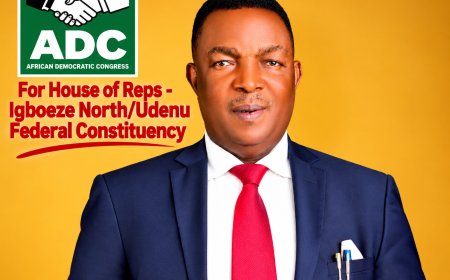
Beyond procedural concerns, there is also a political subtext that cannot be ignored. Both Okowa and Nwoko have declared interest in representing Delta North in the Senate come 2027. This convergence of political ambition and policy disagreement raises questions about whether the Anioma debate is being shaped as much by electoral calculations as by genuine constitutional reform.
Indeed, the unfolding scenario illustrates the complex interplay between identity, governance, and politics in Nigeria. While the idea of Anioma State taps into longstanding aspirations for unity among Igbo-speaking peoples, it also exposes internal divisions over how that unity should be expressed—and at what cost.
For proponents, the benefits are clear: a rebalanced South-East, greater political representation, and a symbolic reunification of culturally aligned communities. For critics, however, the proposal raises red flags about feasibility, timing, and the risk of destabilizing existing administrative structures.
There is also the broader constitutional hurdle. State creation in Nigeria is an arduous process, requiring not only National Assembly approval but also endorsements from state assemblies, local governments, and ultimately, a referendum.
In this light, Okowa’s caution about legislative timing is not without merit. The window for such a significant constitutional amendment may indeed be narrowing as the current legislative cycle progresses.
Yet, even if the proposal does not materialize in the immediate term, its impact is already being felt. It has reignited conversations about regional equity, challenged conventional boundaries, and forced stakeholders to confront uncomfortable questions about identity and inclusion.
As the debate continues, one thing is certain: the dream of Anioma State—whether realized as part of the South-East or retained within the South-South—has moved from the fringes of political imagination to the center of national discourse. What remains to be seen is whether this dream can navigate the intricate web of political interests, constitutional requirements, and communal expectations that define Nigeria’s path to statehood.
In the end, the Anioma question is more than a matter of geography. It is a test of Nigeria’s capacity to reconcile diversity with unity, ambition with consensus, and history with the demands of a changing political landscape.
What's Your Reaction?
 Like
0
Like
0
 Dislike
0
Dislike
0
 Love
0
Love
0
 Funny
0
Funny
0
 Angry
0
Angry
0
 Sad
0
Sad
0
 Wow
0
Wow
0