












































APC, ADC Trade Blame Over Party Crisis, Court Orders and INEC Role
The APC pushed back strongly, blaming the ADC for its predicament and dismissing allegations of external interference as baseless



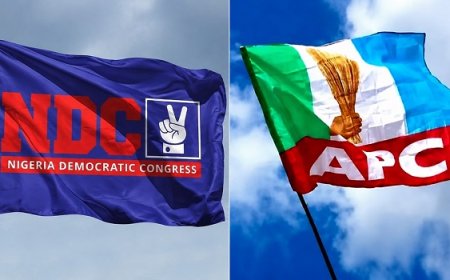
A war of words has erupted between the African Democratic Congress (ADC) and the All Progressives Congress (APC), with both parties sharply divided over the ADC’s internal crisis and the role of the Independent National Electoral Commission (INEC).
The dispute was triggered by comments from INEC Chairman, Joash Amupitan, who warned during an interview on Arise News that the ADC’s planned congresses and national convention could violate existing court orders.
In response, the ADC accused the electoral body of misinterpreting a Court of Appeal directive to maintain the status quo, describing the chairman’s remarks as a “wilful distortion” and an overreach of INEC’s constitutional authority. The party insisted that no court order explicitly prohibits it from conducting its internal activities and maintained that preserving the status quo does not equate to halting democratic processes.
In a statement signed by its National Publicity Secretary, Bolaji Abdullahi, the ADC argued that INEC lacks the power to suspend party functions, stressing that its role is limited to monitoring, not determining the legality of internal processes. The party also said ongoing disputes within its ranks do not invalidate its constitutional right to organize congresses and conventions.
However, the APC pushed back strongly, blaming the ADC for its predicament and dismissing allegations of external interference as baseless. In a separate statement, APC National Publicity Secretary Felix Morka described the ADC as a “confused and desperate” party responsible for its own internal breakdown.
The APC linked the crisis to a leadership dispute allegedly involving David Mark and Rauf Aregbesola, claiming their emergence violated the ADC’s constitutional provisions. It argued that INEC’s decision not to recognize the faction was based on a valid court ruling and aligned with democratic norms.
According to the ruling party, the ADC’s failure to properly manage its internal affairs undermines its credibility as a political platform. It also criticized the opposition party for focusing on attacks rather than policy ideas.
Meanwhile, the ADC rejected comparisons to past electoral disputes and insisted it is acting in full compliance with the law. The party warned that INEC’s interpretation of court orders could set a dangerous precedent by allowing regulatory bodies to restrict lawful political activities.
The APC, on its part, reaffirmed its support for the administration of Bola Tinubu, stating that it remains committed to its governance agenda and the strengthening of democratic institutions.
The escalating exchange highlights growing tensions over party governance, judicial interpretation, and the limits of electoral oversight, raising broader concerns about the balance between regulation and political freedom in Nigeria’s democracy.
What's Your Reaction?
 Like
0
Like
0
 Dislike
0
Dislike
0
 Love
0
Love
0
 Funny
0
Funny
0
 Angry
0
Angry
0
 Sad
0
Sad
0
 Wow
0
Wow
0