











2027: What Will Secure Tinubu a Second Term?
"Our lives begin to end the day we become silent about things that matter." — Dr Martin Luther King, Jr.



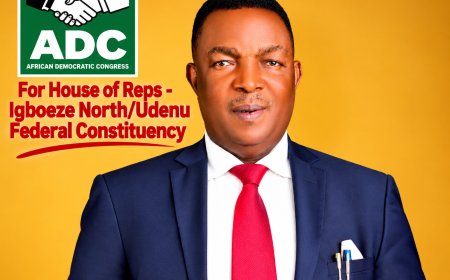
By Ike Abonyi.
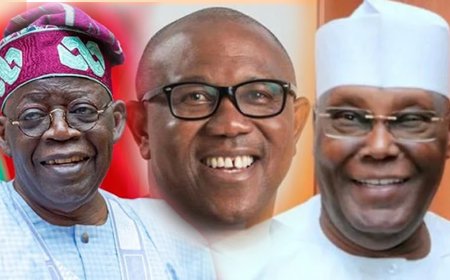
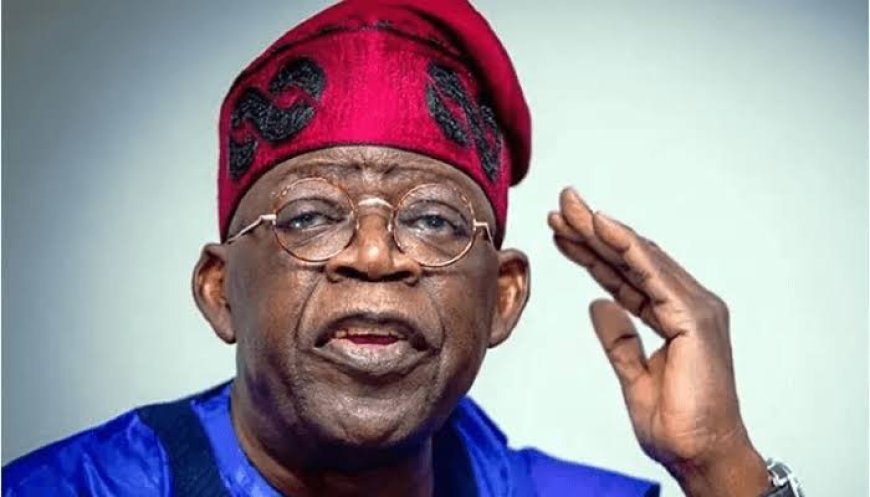
The strong outcry of "Tufiakwa!"—a powerful expression of disapproval in Nigerian Pidgin meaning "God forbid"—clearly reflects the deep-seated concerns many Nigerians have about Bola Ahmad Tinubu's potential to extend his presidency beyond 2027. This reaction showcases a collective determination to prevent such an outcome. However, the public must recognise that unless decisive action is taken, guided by a strong and strategic opposition, this scenario remains a real possibility. A weak, inconsistent, and self-serving opposition cannot stop Tinubu, no matter the widespread discontent among the electorate. An opposition that focuses solely on personal gain lacks the capacity to lead a genuine people's movement, posing a significant threat as we approach 2027.
In Nigerian politics, the seeds of a second term are rarely sown in the election year; they are watered in the quiet, calculated manoeuvres of the mid-term. As the opposition looks toward 2027, the question is no longer just about the President’s popularity, or otherwise but about the structural inevitabilities being built today. To ignore these signals is to concede the race before the first whistle is blown.
This week, we will examine the factors that contribute to this potential reality. The overwhelming majority—at least seven out of ten Nigerians you encounter—express outrage against the current regime. When asked, “Do you want Tinubu to be President beyond 2027?” the answer is a resounding no. Yet, while Nigerians crave traditional meals like amala or agbu, they often settle for fast food instead of supporting local eateries. This unfortunate trend is mirrored in our political choices. Everyone knows what is best for the country, yet many act contrary to this knowledge, either through inaction or misguided decisions. As long as we accept substandard conditions in our neighbourhoods, we must brace ourselves for the undesirable consequences that follow. An old African proverb warns against fetching firewood infested with ants and then questioning why reptiles invade our homes—this wisdom is increasingly relevant to us Nigerians.
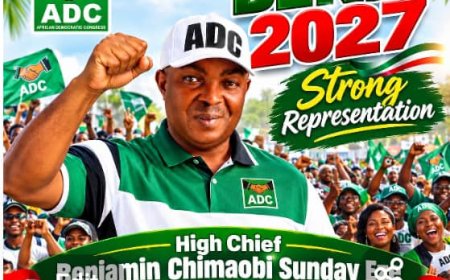
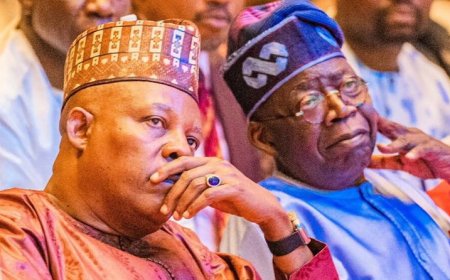
Consider an opposition coalition like the ADC, which aims to remove Tinubu from office but continues to hesitate over zoning, despite witnessing the negative impact that ignoring it has had on political parties like the PDP. The only thing Tinubu is relying on to stay in power, after a clear failure in governance, is that it is the turn of the South, and he is a Southerner. Any opposition seeking to dethrone Tinubu must take this reality into account. Tinubu's regime is not offering the future we want; imagine Nigeria under his leadership in 2026, with some charlatans he has picked as ambassadors, and the coercion of the APC-dominated parliament to legislate a no-offence certificate forgers seeking any leadership roles in our country. However, instead of these glaring issues to galvanise us as a people, Nigerian politicians often attempt to enjoy a cake they have yet to bake. Otherwise, why should Nigerians cast their votes only to be unable to defend them, often waiting idly for foreign observers/monitors to uphold the integrity of our elections?
To foster the leadership we genuinely desire for this country, we must stand firm and strive for it. If democracy means that power resides with the people, and voters determine who leads, why do we seek solutions outside ourselves? When voters choose complacency over action and fail to take control of their own destinies, their grievances attract no sympathy. Political spaces do not remain empty; they will be filled by those who are willing to take risks, even if their motives are unscrupulous.
We have navigated this tumultuous political landscape in this country before, notably during the late General Sani Abacha's regime. While very few supported that situation, many disgruntled citizens remained silent. Instead of fighting for good governance, politicians cowardly and corruptly backed Abacha as the sole candidate for the five registered political parties. Nigerians waited for Abacha’s transition from military rule to democracy until divine intervention altered the course of events. Unfortunately, many disillusioned Nigerians today fondly reminisce about the Abacha era, wishing for a miracle to rescue us from our current political predicament, where Tinubu appears to be buying up everyone. This reflects a profound failure on the part of both politicians and the electorate to heed historical lessons. They sit idly and pray to God to come down from heaven to do what they should do themselves. If Abacha was a military ruler employing draconian measures against civilians, and God intervened then, we must question: Is Tinubu a military man? Why should we allow him to govern like Abacha when he operates under the rule of law?
Ironically, the current President, Tinubu, who once boldly opposed Abacha, now coerces state governors and political heavyweights against the will of their constituents. Yet, the intoxicating grip of power seems to have dulled any lessons he may have learned. In Igbo culture, at the palace of ‘Eze Onye Agwalam,’ only one voice reverberates, often failing to heed impending dangers. When a drunkard is behind the wheel, the only sound he recognises is the crash that signifies the end of his reckless journey.
For the suffering masses, mere hope that what we reject will remain at bay is not sufficient; we must take bold, decisive action to achieve our goals. President Tinubu knows full well that his presidency does not reflect the will of the majority of Nigerians, yet he remains undeterred in his quest for power. He has faced numerous challenges in the past and navigated the intricate landscape of various factions on his way to Aso Rock. In 2023, he skillfully embraced former foes like Nasir El-Rufai to further his ambitions, only to turn against them when it served his interests. This raises the question: Does Tinubu genuinely value Nyesom Wike, or is he merely exploiting Wike's disruptive role for his personal gain? He is actively seeking wisdom to manage complex relationships vital for his political survival.
As we lament the state of the nation, we must confront an unsettling truth: many of us come with a price tag, ready to compromise our values. The reality is stark—no one seems willing to make meaningful sacrifices for Nigeria’s advancement. We often prioritise selfishness over selflessness while pretending to care about the dire circumstances plaguing our communities. Approximately 40% of opposition politicians, including key Coalition leaders, are poised to sell out for the highest bidder, all while masquerading as true dissenters.
It is undeniable that every Nigerian has a price. Judges, security forces, clergy, traditional rulers, media figures, politicians, youth, activists, labour unions, and elder statesmen can all be influenced or corrupted. Some individuals are easily swayed, while others demand a higher price, and there are those willing to pay. Opposition figures collaborating with Tinubu can be divided into two categories: the visible and the insidious. The ruling party’s aggressive strategy to buy out every stakeholder has led to claims of a weakened opposition ahead of the 2027 elections, leaving very few untouched. Some are compensated for their silence, while others work to undermine from within. Take, for instance, the FCT Minister, who plays a double role—both sabotaging and employing underhanded tactics. Minister Wike represents the visible faction, but there are also hidden players secretly negotiating to betray their party for financial gain.
Today, we find ourselves at a crucial point in our nation’s history where sharing our stories is essential. It is vital for everyone—neighbours, families, and community leaders—to recognise that corruption and the absence of free, fair, and transparent elections pose significant threats to our democratic values.
The younger generation has a critical role in combating injustice. They must summon the strength and clarity to confront these challenges together. Until we collectively declare that we have had enough, we should not be surprised if Bola Tinubu remains President of Nigeria beyond 2027. Our “God forbid” must translate into action, not just emotion. It is time for us to take a stand; failing to do so would leave us in a dire situation. God help us.
What's Your Reaction?
 Like
0
Like
0
 Dislike
0
Dislike
0
 Love
0
Love
0
 Funny
0
Funny
0
 Angry
0
Angry
0
 Sad
0
Sad
0
 Wow
0
Wow
0